 Listicle
7 Expert Gutter Cleaning Methods for Property Owners
Last Updated: October 26, 2026
Quick Summary
Gutter cleaning removes debris, restores water flow, and protects your property's structural integrity through hand removal, water flushing, downspout clearing, and professional inspection that prevents costly water damage.
- Professional gutter cleaning includes debris removal, downspout testing, gutter inspection, fascia assessment, and photographic documentation.
- Cleaning frequency depends on tree type, roof pitch, building height, and local weather, baseline is late fall, with spring cleaning added for seed producers or heavy pollen.
- Clogged gutters cause foundation damage, roof deterioration, fascia rot, and pest problems costing $5,000-$25,000 in water damage claims.
- Professional service costs $160-$180 per visit, far less than foundation repair, roof replacement, or mold remediation.
- Two-story homes, heavy tree coverage, steep roofs, or damaged gutters warrant professional service over DIY cleaning due to fall risk and inspection value.
Table of Contents
- What Professional Gutter Cleaning Includes
- Understanding Gutter Cleaning Cost and Pricing Factors
- How Professionals Clean Gutters: Proven Techniques
- How Often to Clean Gutters: Seasonal and Property-Specific Schedules
- DIY vs. Professional Gutter Cleaning: When to Call an Expert
- Why Professional Gutter Cleaning Protects Your Property
- Scheduling Your Professional Gutter Cleaning Service
- Frequently Asked Questions
What Professional Gutter Cleaning Includes
Professional gutter cleaning removes debris, restores water flow, and protects your property's structural integrity, you're paying for a documented inspection that prevents costly water damage.
A complete service typically covers:
- Debris removal from gutters and downspouts, leaves, twigs, roof debris, and sediment cleared by hand or vacuum
- Downspout clearing and drainage testing, ensuring water flows freely away from your foundation
- Gutter inspection, identifying damage, leaks, sagging sections, or separation from the fascia
At Roof Tune Up, we know gutter cleaning isn't just about clearing leaves.
The difference between a basic cleanup and professional gutter cleaning is the inspection. A contractor who scoops debris without checking downspout flow, gutter slope, or fascia condition misses the early warning signs of bigger issues.
Understanding Gutter Cleaning Cost and Pricing Factors
Gutter cleaning is priced per visit from a few inputs. Understanding them lets you read an estimate, compare quotes fairly, and budget for a year.
What drives the price of a single visit
- Gutter length and home size. Most contractors price by linear feet of gutter or by home size tier. A single-story ranch with roughly 120 linear feet costs less than a two-story home with 250 or more linear feet, because labor time scales with length and height.
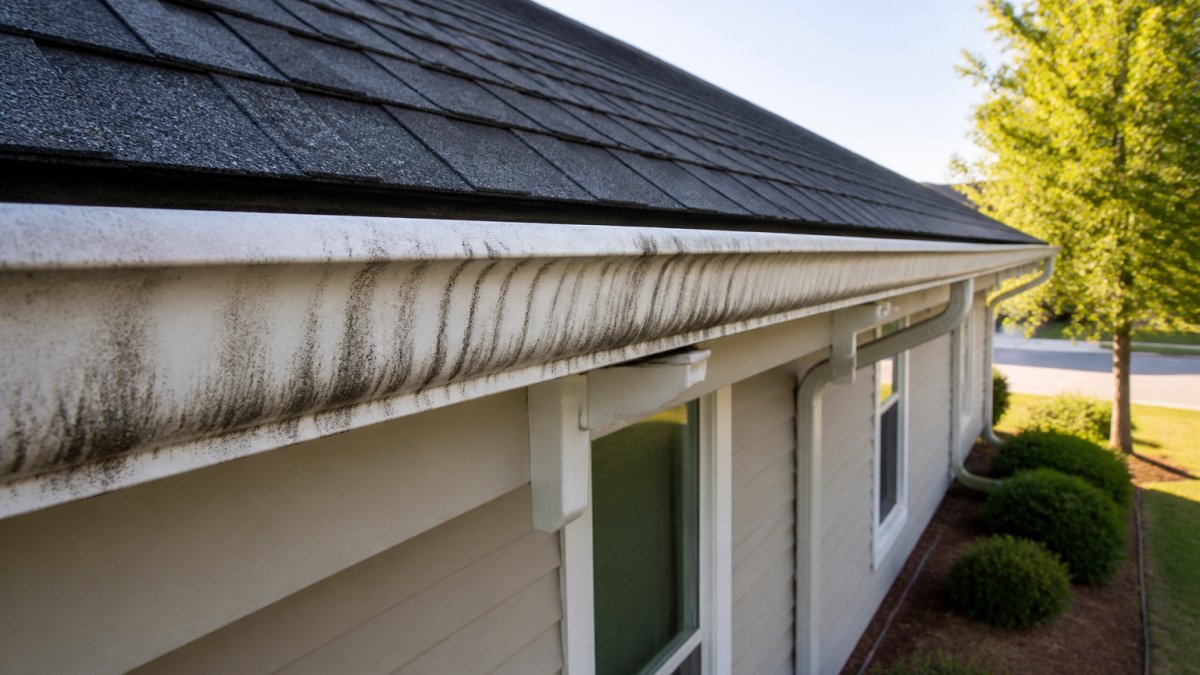
- Debris load and condition. Lightly soiled gutters take less time than gutters packed with compacted leaves, grit, or pest nests. Mold, algae, and nests can add treatment time.
- Access and roof pitch. Steep roofs, complex rooflines, and multi-story homes require more safety equipment and slower work. Easy-access single-story homes are faster and cheaper.
Most contractors use a quote-based model: they assess the property and price the specific job. Treat a phone quote without an on-site or photo-based assessment as a rough estimate, not a firm price.
One-time visit versus a recurring maintenance plan
Property owners choose between two buying models, depending on debris load and how much you want to think about gutters.
One-time visit. You call when gutters look full or water overflows. You pay only when needed with no commitment, but you must notice the problem yourself, cleanings happen after a clog rather than before, and peak-fall scheduling costs more.
Recurring maintenance plan. The contractor schedules cleanings on your property-specific interval, often fall and spring, sometimes three times a year for heavy tree cover, with inspection and photos each visit. Cleanings happen before overflow, history is tracked, and small issues are caught early, but you commit to a schedule and pay whether or not gutters look full. Suits heavy tree cover, multi-story homes, and owners who want documented records.
Many contractors also offer a seasonal plan with an inspection between cleanings, cheaper than a full multi-visit plan while still catching problems early.
How to budget for a year
Budget per year, not per visit:
- Estimate your visit count, one, two, or three cleanings per year.
- Get a per-visit quote for your property, not a national average.
- Multiply visits by the per-visit price for a baseline annual figure.
- Add a contingency for one add-on or minor repair per year, such as a downspout re-securing or a section of guard.
- Compare that annual figure to the cost of the damage you are preventing, foundation repair, fascia replacement, or roof deck repair, which is typically far larger than a year of maintenance.
Reading an estimate
A useful estimate states the scope, not just a price: number of downspouts cleared and tested, whether inspection, photos, and debris haul-away are included, and what's excluded (repairs, guards, treatment). Compare scope first and price second, a lower quote omitting downspout testing or haul-away is not the same service.
How Professionals Clean Gutters: Proven Techniques
Professional gutter cleaning relies on proven methods that balance effectiveness with safety.
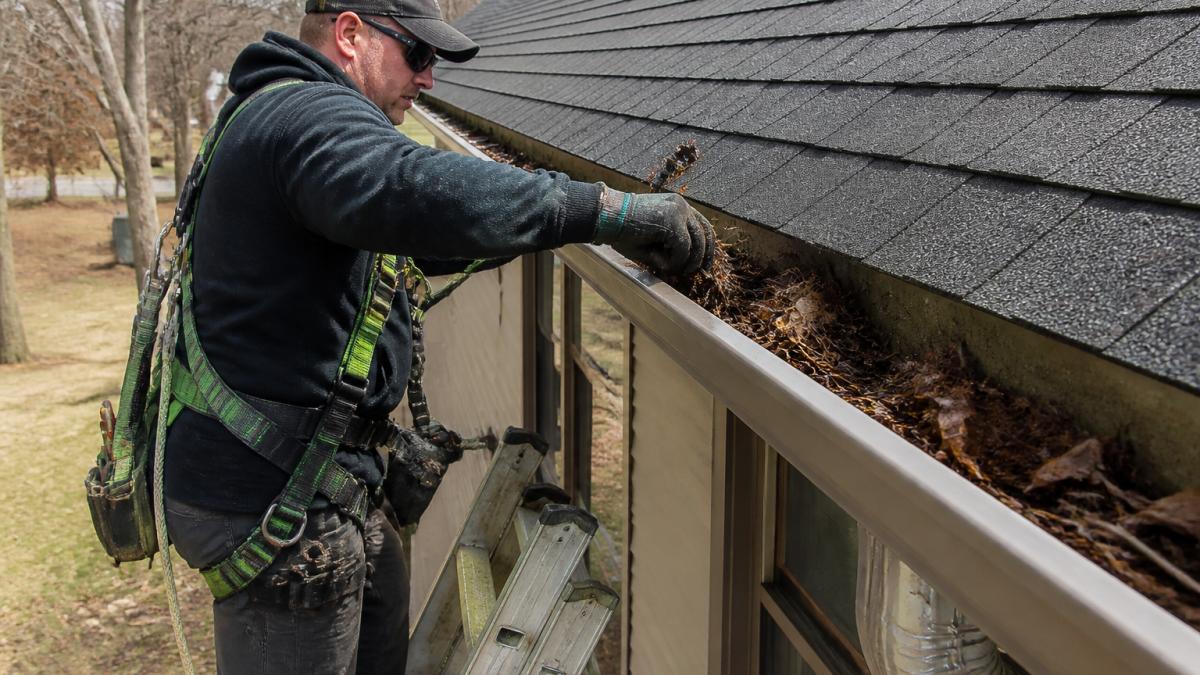
Here's how the process typically works:
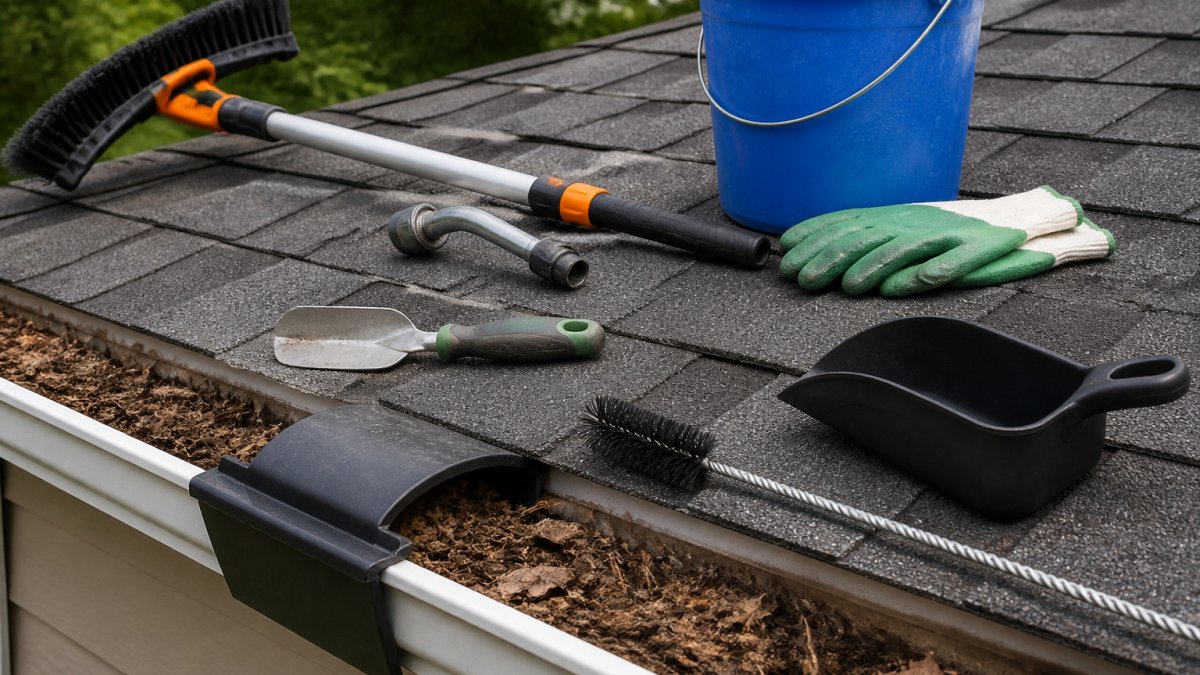
Hand scooping and bagging. The technician uses a gutter scoop or small shovel to remove leaves, twigs, and roof debris into a collection bag. It gives direct control and visibility, and is slower than pressure washing but safer for older gutters and shingles.
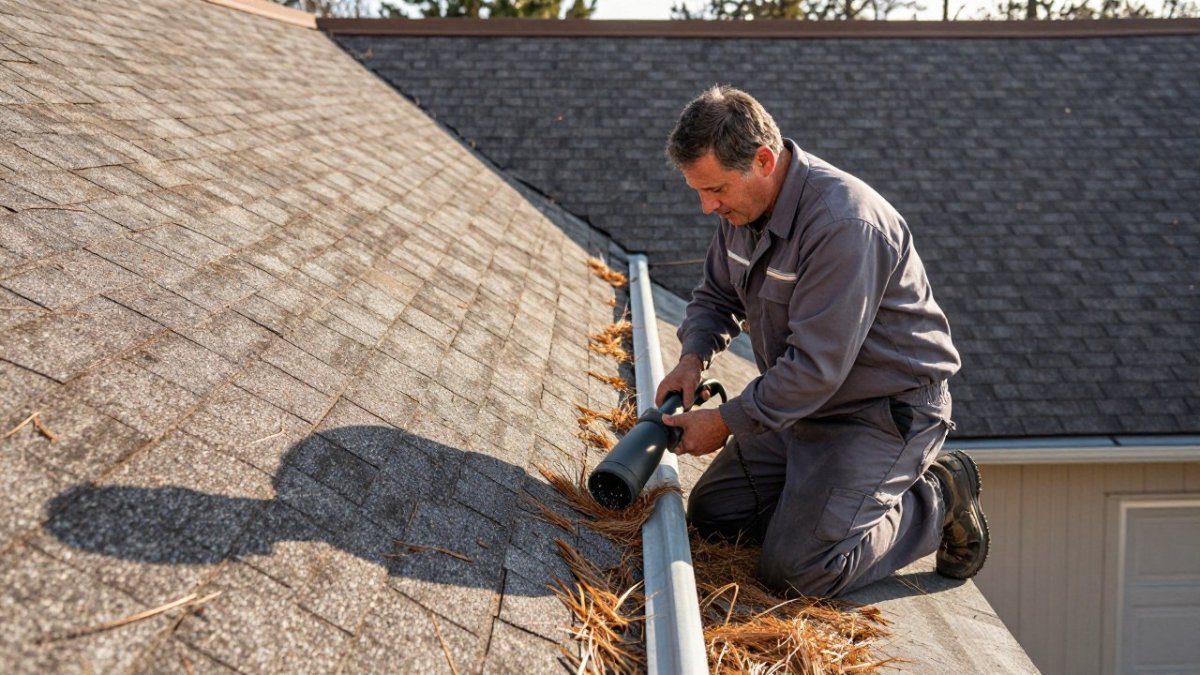
Vacuum extraction. Wet/dry vacuums are faster for heavily soiled gutters but require more equipment and skill to avoid damage.
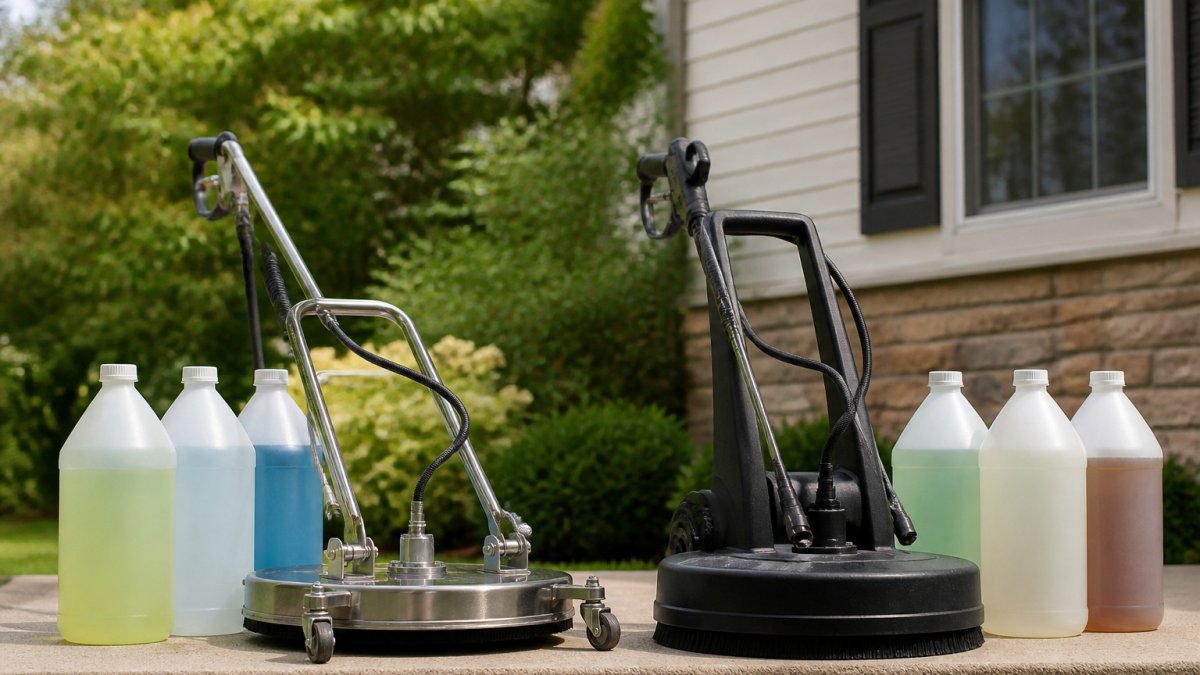
Pressure washing. High-pressure cleaning removes algae, moss, and stubborn buildup but risks damaging older gutters, shingles, or fascia.
Watch out: pressure washing gutters above 2,500 PSI can crack seams, dent aluminum gutters, or force water behind fascia boards.
How Often to Clean Gutters: Seasonal and Property-Specific Schedules
Most guides say clean gutters twice a year and stop there. That's a starting point, not a schedule. The right frequency depends on four variables: what falls on your roof, your roof type, building height, and local weather. Build your schedule around those four and stop guessing.
Variable 1: Tree cover and debris type
Not all tree cover is equal. The debris that lands in your gutters determines how fast they clog and what kind of clog you get.
- Deciduous hardwoods (oak, maple, elm): Heavy leaf drop in fall, plus seed pods and tassels in spring. Expect a late-fall cleaning after the canopy is bare and a spring cleaning to clear flowers and seeds. Properties with mature overhanging oaks often need a third mid-fall pass because leaves drop in waves.
- Conifers (pine, spruce, fir): Needles shed year-round and mat into a dense, felt-like layer that holds water and resists flushing. Needle-heavy properties typically need cleaning every four to six months, not twice a year, because a thin needle mat can block flow long before it looks full.
- Seed and catkin producers (cottonwood, willow, birch): Spring fluff and catkins travel into downspouts and form tight plugs at bends. A spring cleaning timed to the end of catkin drop prevents the most common downspout blockage of the season.
Practical rule: the closer the canopy and the more overhang, the shorter your interval. No overhanging branches can often go a full year; under a mature pine, three cleanings.
Variable 2: Roof type and pitch
Roof geometry changes how debris moves and how much grit reaches the gutters.
- Asphalt shingles shed mineral granules that settle in gutters as grit and combine with leaves to form a sludge that hand-scooping misses. These gutters benefit from a water flush every visit, not just debris removal.
- Metal roofs shed debris faster but concentrate it at the gutter line during heavy rain, and smooth panels can send sheets of water that overflow a partially blocked gutter quickly.
- Tile and slate roofs are heavier and more fragile at the edge, which raises the cost and care required to clean the gutter beneath them and often justifies professional service even on a single-story home.
Variable 3: Building height and access
Height changes both risk and method. A single-story ranch with a low pitch can be cleaned from a ladder with a scoop and hose. A two-story home with a complex roofline usually needs ladder stabilizers, standoff brackets, or roof access, and time and safety equipment scale with height. Multi-story buildings often need multiple access points and a documented walkthrough of every downspout.
Variable 4: Weather and climate exposure
Local weather sets the calendar boundaries around your cleanings.
- Heavy snow and ice: The critical cleaning is the one before the first freeze. Debris left in gutters traps meltwater, feeds ice dams at the eave, and can force water under shingles. Fall cleaning is not optional in these climates.
- Heavy pollen seasons: Fine pollen and seed debris pass through gutter screens and pack downspout bends. A spring flush after peak pollen keeps flow rates up.
- Coastal salt spray and sand: Sand accumulates in gutter bottoms and salt accelerates corrosion at seams and hangers. Coastal properties benefit from more frequent inspection for fastener and seam condition, not just debris removal.
Putting the variables together
Start with a baseline and adjust:
- Baseline: one late-fall cleaning after leaf drop.
- Add a spring cleaning if you have catkin or seed producers, heavy pollen, or a history of spring downspout clogs.
- Add a mid-fall or summer pass if you have overhanging branches, conifers, or a steep roof that concentrates debris.
- Shorten the interval to every four to six months for needle-heavy properties, coastal exposure, or multi-story buildings where access is difficult and problems go unnoticed longer.
- Inspect between cleanings. After the first heavy fall rain, look at the downspout outlets. If water is not flowing freely, your interval is too long.
The goal is not to clean as often as possible. It is to clean before debris causes overflow, and to inspect often enough that a small problem is caught before it becomes a repair.
Gutter cleaning frequency depends on tree type, roof characteristics, building height, and local weather.
| Factor | Examples or Conditions | Cleaning Frequency |
|---|---|---|
| Deciduous hardwoods | Oak, maple, elm | Late fall and spring, sometimes mid-fall |
| Conifers | Pine, spruce, fir | Every four to six months |
| Seed and catkin producers | Cottonwood, willow, birch | Spring cleaning after catkin drop |
| No overhanging branches | Minimal tree cover | Once per year |
| Heavy snow and ice climates | Freeze risk, ice dams | Critical cleaning before first freeze |
| Coastal salt spray exposure | Sand and salt accumulation | More frequent inspection for corrosion |
| High-rainfall regions | Heavy storms | More frequent cleaning than baseline |
DIY vs. Professional Gutter Cleaning: When to Call an Expert
Many owners attempt DIY gutter cleaning to save money. The question isn't whether you can, it's whether you should, and when professional service becomes the smarter choice.
DIY gutter cleaning works best if:
- Your home is single-story with easy roof access
- You have minimal tree coverage and light debris accumulation
- You're comfortable working at heights and have proper ladder safety training
You should hire a professional if:
- Your home is two stories or higher (fall risk increases dramatically)
- You have heavy tree coverage or significant debris accumulation
- Your gutters show signs of damage, sagging, or separation
The real cost difference: DIY saves the labor fee (roughly $100-$150) but costs your time, equipment, and injury risk. A fall from a ladder costs far more than professional service.
What most guides miss: professional gutter cleaning includes inspection and documentation.
Why Professional Gutter Cleaning Protects Your Property
Clean gutters are essential for property protection, yet many owners underestimate neglect.
Here's what happens when gutters fail:
Foundation damage. When gutters overflow or downspouts discharge water too close to the foundation, water saturates the soil and seeps into basements or crawl spaces, leading to mold, foundation cracks, and costly waterproofing repairs.
Roof deterioration. Standing water in gutters backs up under shingles, rotting the roof deck and shortening shingle lifespan.
Fascia and soffit rot. Water that overflows behind gutters saturates wood fascia and soffits, causing rot and pest entry.
Pest and mold problems. Standing water in gutters attracts mosquitoes, birds, and rodents.
Professional gutter cleaning removes the conditions that cause these problems. Learn how roof cleaning complements gutter cleaning to fully protect your property.
According to Liberty Home Guard's property maintenance analysis, most homeowners who maintain clean gutters avoid water damage claims that average $5,000-$25,000.
Scheduling Your Professional Gutter Cleaning Service
Here's what to expect and how to choose a contractor.
Getting a quote. Call local contractors for a free estimate. A quality contractor asks about home size, roof pitch, tree coverage, and gutter condition.
What to ask contractors:
- Do you include downspout clearing and testing?
- Will you inspect for damage and provide photos?
- Are you licensed and insured?
Timing. Schedule cleaning in late fall (October-November) after leaves drop. If you need spring cleaning, schedule in April-May.
Service quality indicators. Look for before-and-after photos, written findings, and follow-up recommendations, the signals of professional service.
When you're ready to protect your property with professional maintenance, professional roofing services built to last from Roof Tune Up ensure your gutters and roof system work together to defend your home.
Frequently Asked Questions
What's the average price to clean gutters professionally?
For an accurate quote tailored to your property, contact a local professional service provider directly.
How often should property owners have their gutters cleaned?
Most property owners should schedule gutter cleaning twice yearly: once in late spring after spring pollen and debris settle, and again in fall after leaves drop. Homes near trees, in areas with heavy rainfall, or in regions with four distinct seasons may need three or four cleanings annually. Properties in mild climates with minimal debris may manage with one annual cleaning. A professional inspection can determine the right schedule for your specific property and location.
How do professionals clean house gutters differently from DIY methods?
Professional gutter cleaning includes systematic debris removal from gutters and downspouts, inspection for damage or misalignment, and verification of proper water flow toward drainage systems. Professionals use specialized equipment, follow safety protocols, and document work completion. DIY cleaning often misses downspout blockages, doesn't assess structural issues, and carries fall risks. Professional service also prevents debris from refilling gutters as quickly because the entire system, not just surface debris, is cleared and inspected.
Is it safer to hire a professional to clean gutters than doing it myself?
Yes. Professional gutter cleaners have fall-prevention training, proper safety equipment, and liability insurance. Ladder accidents are a leading cause of home injuries; professionals reduce this risk significantly. They also work efficiently at heights and can spot structural problems like fascia damage or improper slope that DIY cleaners might miss. For multi-story homes or properties with steep roofs, professional service is strongly recommended to avoid serious injury.
Protecting your property from water damage starts with clean, functioning gutters. Professional gutter cleaning removes debris, identifies problems early, and keeps your roof and foundation safe. Whether you choose DIY maintenance for simple situations or hire a professional for thorough inspection and documentation, the key is consistency, regular cleaning prevents the water damage that costs thousands to repair.