 How-to
7 Habits That Prevent Tiger Stripes on House Gutters
Last Updated: October 28, 2026
Quick Summary
You prevent tiger stripes on house gutters by controlling what flows over the gutter face, keeping the factory finish intact, and inspecting on a schedule. Clean the roof first, check gutter pitch, clear downspout outlets, trim trees back, and rinse the gutter face after storms. Touch up scratches, reseat loose gutter guards, and clean gutters at least twice a year.
- Gutters should slope toward the downspout at roughly 1/4 inch per 10 feet.
- Test each downspout with a hose in spring and fall to catch clogs.
- Rinsing the gutter face after storms is the cheapest habit on the list.
- Twice a year is the baseline cleaning frequency for most homes.
- Call a professional if streaks return right after cleaning or paint is flaking.
Table of Contents
- What Causes Tiger Stripes on Gutters
- Diagnose the Stain Before You Treat It
- How to Remove Tiger Stripes from Aluminum Gutters
- Safe Gutter Cleaning Solutions for Painted Metal
- Habits That Stop Streaks Before They Form
- Gutter Cleaning Frequency That Actually Works
- When to Stop DIY Cleaning and Call a Professional
- Book a Gutter Assessment with Roof Tune Up
- Frequently Asked Questions
What Causes Tiger Stripes on Gutters
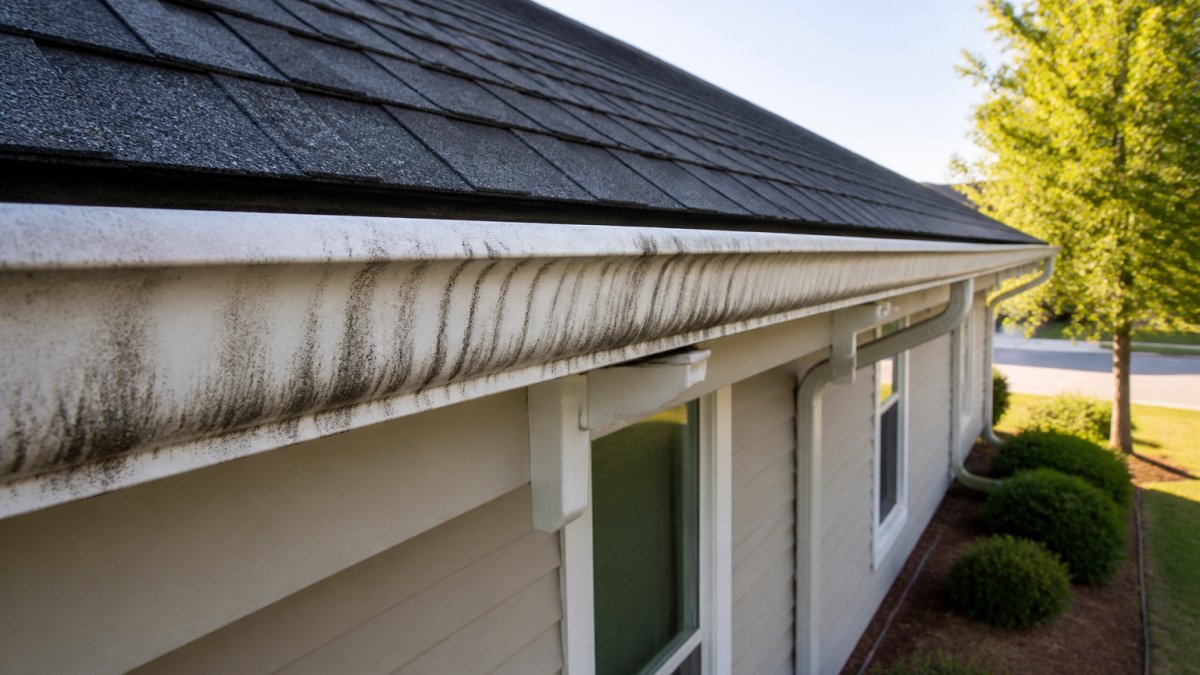
Tiger stripes on house gutters are those dark, vertical bands that run down the face of the gutter like the markings on a tiger. They are not dirt sitting on top of the metal. They are a change in the surface itself, and that distinction decides how you treat them.
The stripes usually come from one of three sources: oxidation of the aluminum finish, algae and organic growth fed by roof runoff, or built-up debris deposits that hold moisture against the metal. Knowing which one you have changes the entire cleaning approach.
Oxidation and Chalking on Aluminum
Aluminum gutters carry a factory finish, often a paint layer over the metal. Sun, rain, and temperature swings break that finish down over time. The result is oxidation: a chalky, dull surface that holds onto dirt and shows streaks far more readily than a fresh finish.
Once oxidation starts, the gutter exterior acts like a sponge for grime. Rainwater carries dissolved material down the face and leaves it behind as a vertical stain. This is why older aluminum gutters streak faster than new ones.
Algae, Runoff and Debris Deposits
Roof runoff is the second big culprit. Rainwater flowing off shingles picks up grit, pollen, and organic matter, then pours over the gutter edge. That water leaves deposits behind as it dries. Algae and mildew feed on the damp organic film, and the streaks darken.
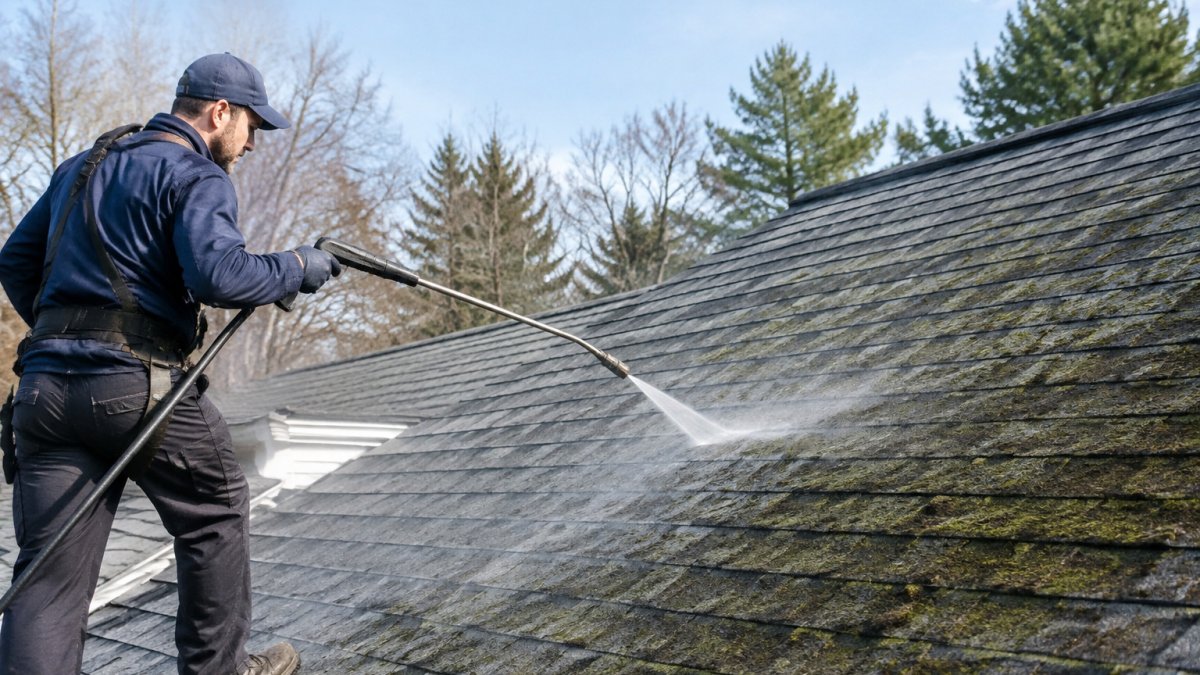
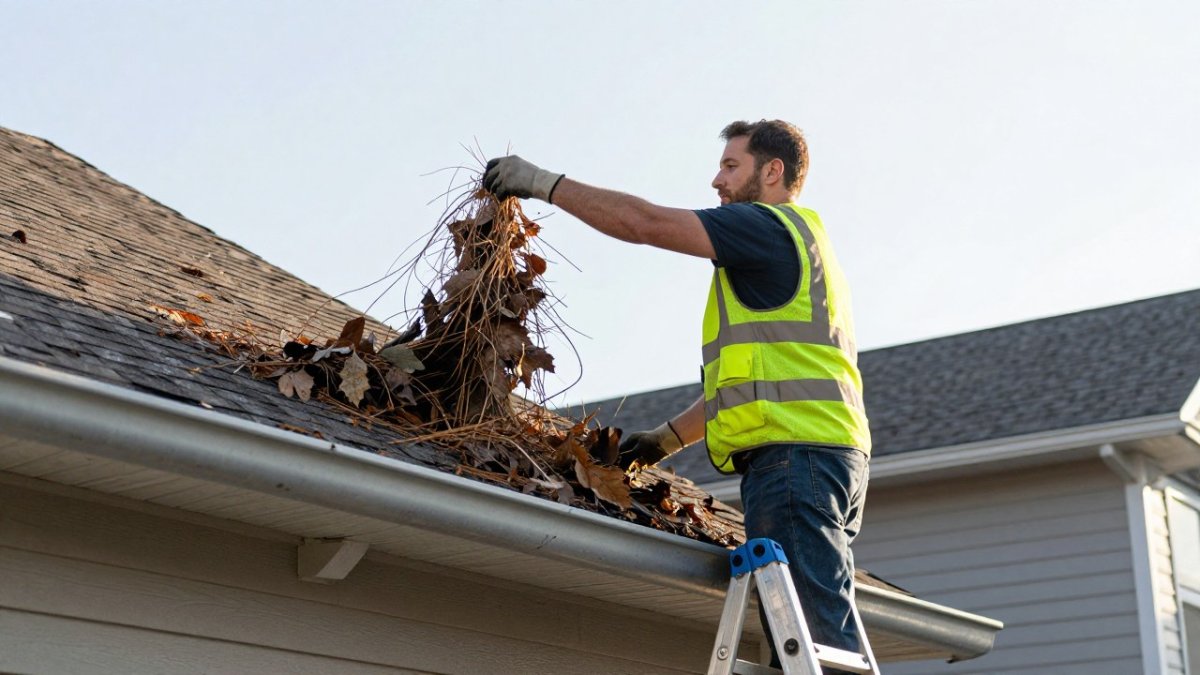
Debris makes it worse. When leaves and grit collect in the gutter or on the roof above it, moisture stays trapped longer. That constant dampness feeds growth and keeps the metal wet. Cleaning the roof and the gutter together addresses the source. Roof cleaning removes the organic matter that feeds these streaks.
Diagnose the Stain Before You Treat It
Diagnosis comes first, and it is the step most guides skip. Treating an algae streak like a rust stain, or a paint problem like dirt, wastes effort and can damage the finish.
Run a simple test. Pick a small, out-of-the-way spot on the gutter face and clean it gently. Then look at what happens.
- Algae or mildew: the stain lifts with mild soap and light scrubbing, and the metal underneath looks normal.
- Oxidation: the surface feels chalky, and the color looks faded rather than stained.
- Rust: the stain is orange-brown and sits at a scratch, seam, or fastener where bare metal is exposed.
- Paint failure: the coating is flaking or peeling, not just discolored.
The result tells you whether you need cleaning, touch-up paint, or a professional assessment. Guessing wastes a Saturday.
How to Remove Tiger Stripes from Aluminum Gutters
Removal follows a repeatable process. The goal is to lift the deposits without harming the finish, so technique matters as much as the cleaner.
Step-by-Step Removal Process
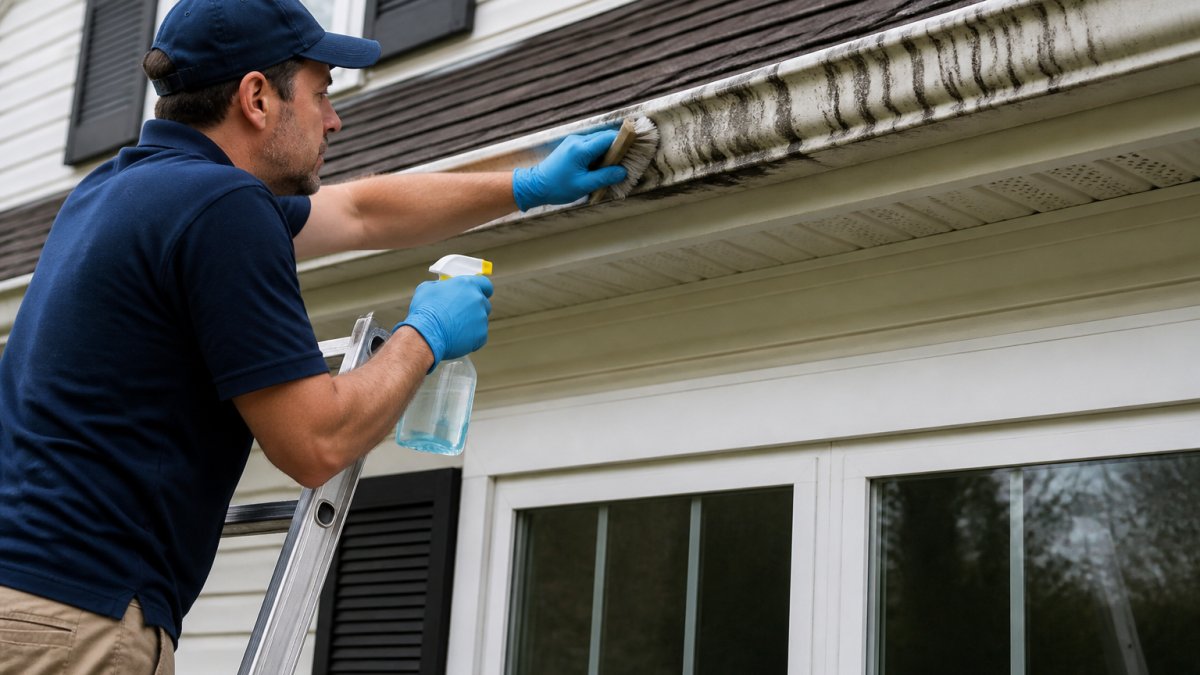
- Set up safely. Work from stable ground or a secured ladder. Never lean out over the gutter.
- Rinse loose debris first. A garden hose knocks off grit before you scrub, so you are not grinding dirt into the finish.
- Apply your cleaner. Use a pump sprayer or spray bottle to coat the streaked area evenly.
- Let it dwell. Give the solution a few minutes to break down deposits. Do not let it dry on the surface.
- Agitate gently. Scrub with a soft-bristled brush or a car-washing sponge. Skip abrasive pads.
- Rinse thoroughly. Wash away all cleaner and loosened grime with clean water.
- Check and repeat. Stubborn stains may need a second pass. Test a new spot if you switch products.
Watch out: scrubbing a dry gutter face grinds grit into the finish and dulls it permanently. Always keep the surface wet while you work.
Safe Gutter Cleaning Solutions for Painted Metal
Cleaner choice is where most DIY jobs go wrong. Painted aluminum is a soft finish. Harsh chemicals strip it, and strong pressure dings it.
Mild soap and water handles light algae and general grime. For tougher streaks, a specialty cleaner made for painted metal is the safer pick. Some products use sodium hypochlorite or bleach to kill algae, and others use oxalic acid for mineral and rust-type stains. Each has a place, but each needs care.
- Bleach and sodium hypochlorite: effective on algae, but can dull paint and harm plants below. Rinse surrounding surfaces well.
- Oxalic acid: good on rust and mineral stains, but requires gloves and eye protection.
- Mild dish soap: safe for routine cleaning and light deposits.
Always test a spot first. Follow the label, wear gloves and eye protection, and keep runoff away from landscaping.
Habits That Stop Streaks Before They Form
Prevention beats removal every time, but most advice stops at "clean your gutters." The habits that actually keep tiger stripes from forming fall into three buckets: controlling what flows over the gutter face, keeping the finish intact, and inspecting on a schedule so small problems never become streaks.
Control What Flows Over the Gutter Face
Tiger stripes are a runoff problem before they are a cleaning problem. Every gallon that sheets over the front of the gutter carries dissolved grit, pollen, and organic matter that dries into a vertical band. Reduce that flow and you reduce the streaks.
- Clean the roof first. Organic matter on the roof feeds the runoff that stains the gutter. A roof wash in spring removes the food source before the rainy season.
- Check gutter pitch. Gutters should slope toward the downspout at roughly 1/4 inch per 10 feet. A flat or back-pitched run lets water pool and spill over the front lip instead of exiting the downspout, and that spill is what paints a stripe down the face.
- Clear downspout outlets. A clogged outlet backs water up the run until it overflows the front edge. Test each downspout with a hose in spring and fall.
- Trim trees back. Less overhang means less debris and less shade that holds dampness against the metal.
- Rinse the gutter face after storms. A quick hose-down removes fresh deposits before they set. This is the single cheapest habit on the list.
Keep the Finish Intact
A sound factory finish sheds water and resists staining. Once it oxidizes or chips, the aluminum acts like a sponge for grime and streaks form faster. Touch up small scratches and bare fastener heads before rust starts, and avoid abrasive pads that dull the paint layer.
Gutter Guards and Guard Adjustment
Gutter guards cut debris buildup, but only when they fit right. A guard that sits loose or misaligned lets water and grit slip past, and the streaking continues. Check the guard adjustment each season and reseat any panels that have shifted. A properly fitted guard keeps runoff moving and reduces the deposits that cause stains.
A Seasonal Inspection and Cleaning Schedule
A fixed calendar beats guesswork. The schedule below is a starting point; homes under heavy tree cover often need a third pass.
- Early spring: roof wash, clear debris, test downspouts, check pitch and guard fit, touch up scratches.
- Late spring: full gutter cleaning and face rinse after pollen season.
- Late summer: quick inspection after storm season; hose the face if streaks are starting.
- Late fall: clean after leaf drop, reseat guards, confirm downspouts flow.
- Between cleanings: watch for streaks returning within a few months. If they do, the interval is too short for your property.
This is the cleaning frequency that works: frequent enough to stop deposits from setting, not so often that you waste effort. Adjust based on what your property actually does, not a fixed calendar.
These are the habits the article recommends to keep tiger stripes from forming in the first place.
| Habit | What to do | When |
|---|---|---|
| Clean the roof first | Roof wash removes the organic food source in runoff | Spring |
| Check gutter pitch | Slope toward downspout at roughly 1/4 inch per 10 feet | Seasonal inspection |
| Clear downspout outlets | Test each downspout with a hose | Spring and fall |
| Trim trees back | Less overhang means less debris and damp shade | Ongoing |
| Rinse the gutter face | Quick hose-down removes fresh deposits before they set | After storms |
| Keep the finish intact | Touch up scratches and bare fastener heads; skip abrasive pads | Ongoing |
| Adjust gutter guards | Reseat panels that sit loose or misaligned | Each season |
| Follow a seasonal schedule | Spring, late spring, late summer, late fall passes | Fixed calendar |
Gutter Cleaning Frequency That Actually Works
Twice a year is the baseline for most homes: once in late spring and once in fall after the leaves drop. Homes with heavy tree cover often need a third pass.
Watch the gutters between cleanings. If you see streaks returning within a few months, the interval is too long. Adjust based on what your property actually does, not a fixed calendar. This is the cleaning frequency that works: frequent enough to stop deposits from setting, not so often that you waste effort.
When to Stop DIY Cleaning and Call a Professional
Some jobs are worth handing off. If your gutters are high, steep, or hard to reach safely, stop. Ladder work on a two-story home is a real risk.
Call a professional when you see:
- Streaks that return right after cleaning
- Rust at seams or fasteners
- Flaking or peeling paint across large areas
- Gutters pulling away from the house
- Any job that needs you to lean out over the edge
Professionals also spot problems early. A sagging gutter or failing guard is cheaper to fix before it damages the fascia. If you would rather have it handled, our professional gutter cleaning service is available.
Book a Gutter Assessment with Roof Tune Up
Tiger stripes are a symptom, not the whole problem. They signal oxidation, runoff, or trapped debris that will keep coming back until the source is addressed.
Roof Tune Up provides roof cleaning, soft washing, gutter cleaning, and house washing built for lasting results. Our exterior maintenance is engineered for permanence, so your property stays in peak condition longer. We serve homeowners across Connecticut and Massachusetts.
If you want to discuss gutter cleaning, contact Roof Tune Up.
Frequently Asked Questions
What are tiger stripes on gutters?
Tiger stripes are dark vertical bands on the outside face of a gutter.
Can pressure washing remove tiger stripes from gutters?
Roof Tune Up provides soft washing and gutter cleaning.
How often should gutters be cleaned to prevent streaks?
Most homes need gutters cleaned twice a year, in late spring and late fall, with a third visit if tall trees overhang the roofline. Gutter cleaning frequency should rise when you see debris sitting in the channel after rain or water overflowing at the corners. Clearing the channel stops the constant damp film that feeds algae and keeps runoff from staining the gutter exterior. Pair each cleaning with a quick rinse of the outside face to remove fresh deposits before they set.
Is it worth calling a professional instead of cleaning gutters myself?
Roof Tune Up serves Connecticut and Massachusetts homeowners with soft washing and gutter cleaning.
Streaks that keep returning usually point to a bigger issue than surface dirt. Roof Tune Up handles the roof, gutters, and exterior together so the source gets fixed, not just the stain. With roof cleaning, soft washing, and gutter cleaning engineered for permanence, we keep your property protected for the long run. Get started with Roof Tune Up and stop chasing the same streaks every season.