 Ultimate guide
Can Roof Maintenance Prevent Leaks? What Homeowners Should Know
Last Updated: November 24, 2026
Quick Summary
Yes, roof maintenance can prevent leaks: a Georgia Institute of Technology study reported that increased roof repair reduced the odds of roof leaks by 91%. Maintenance lowers risk rather than eliminating it, so contact a roofing contractor as soon as signs of a leak appear.
- Run the leak detection walkthrough twice a year, in spring and fall.
- Never walk the roof yourself; do interior and ground-level checks and leave roof surface work to a professional.
- Clean gutters twice in fall, before and after leaf drop.
- Roughly one in three homeowners replaces a roof because of leaking, according to RubyHome's roofing statistics.
- Keep every maintenance receipt, since a dated service history supports claims and warranty questions.
Table of Contents
- Can roof maintenance prevent leaks?
- The maintenance habits that actually stop water infiltration
- Early warning signs: a step-by-step leak detection walkthrough
- A season-by-season roof maintenance checklist
- What roof leak repair cost looks like when prevention fails
- Does roof age affect home insurance and warranty coverage?
- DIY vs. professional maintenance: where the real safety risks sit
- Scheduling your first professional roof tune-up
- Frequently Asked Questions
Can roof maintenance prevent leaks?
Yes, roof maintenance can prevent leaks, and the evidence is stronger than most homeowners expect. A Georgia Institute of Technology study on roof maintenance records reported that increased roof repair reduced the odds of roof leaks by 91%, according to a summary of the research published by Georgia Tech's institutional repository. That is the core case for a real roof maintenance routine, and it is why we at Roof Tune Up treat prevention as the whole job rather than an upsell.
Here is the honest version, though: maintenance lowers risk, it does not eliminate it. GAF advises contacting a roofing contractor as soon as signs of a leak appear, and frames regular inspections as a way to prevent future leaks, not a substitute for repairing one that already exists. So the answer is yes, with a caveat. Below, we break down the habits that actually stop water infiltration, the warning signs worth catching early, and what happens to your wallet when prevention fails.
The maintenance habits that actually stop water infiltration
Water almost never enters through the middle of a shingle field. It finds the seams, the penetrations, and the edges, which is why a targeted roof maintenance routine beats a generic "check the roof once a year" approach.
Flashing, seams, and the spots leaks start
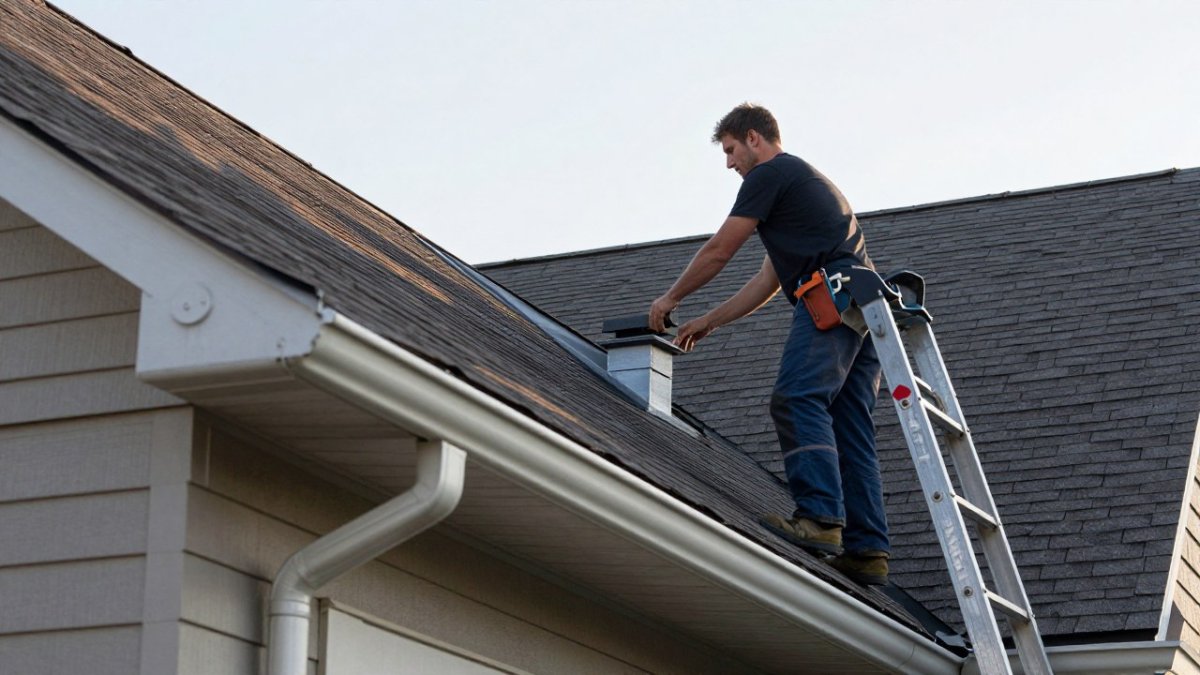
Flashing is the metal edging that seals roof-to-wall junctions, chimneys, vents, and skylights. It is a common entry point for water infiltration and is straightforward to inspect. Lifted edges, cracked sealant, and rusted sections all let water behind the shingle layer where you cannot see the damage until the ceiling stains.
What most guides miss is that flashing failures are rarely sudden. They start as hairline gaps that open over a season or two. Resealing a seam early can prevent more extensive repairs later.
Drainage paths, gutters, and debris buildup
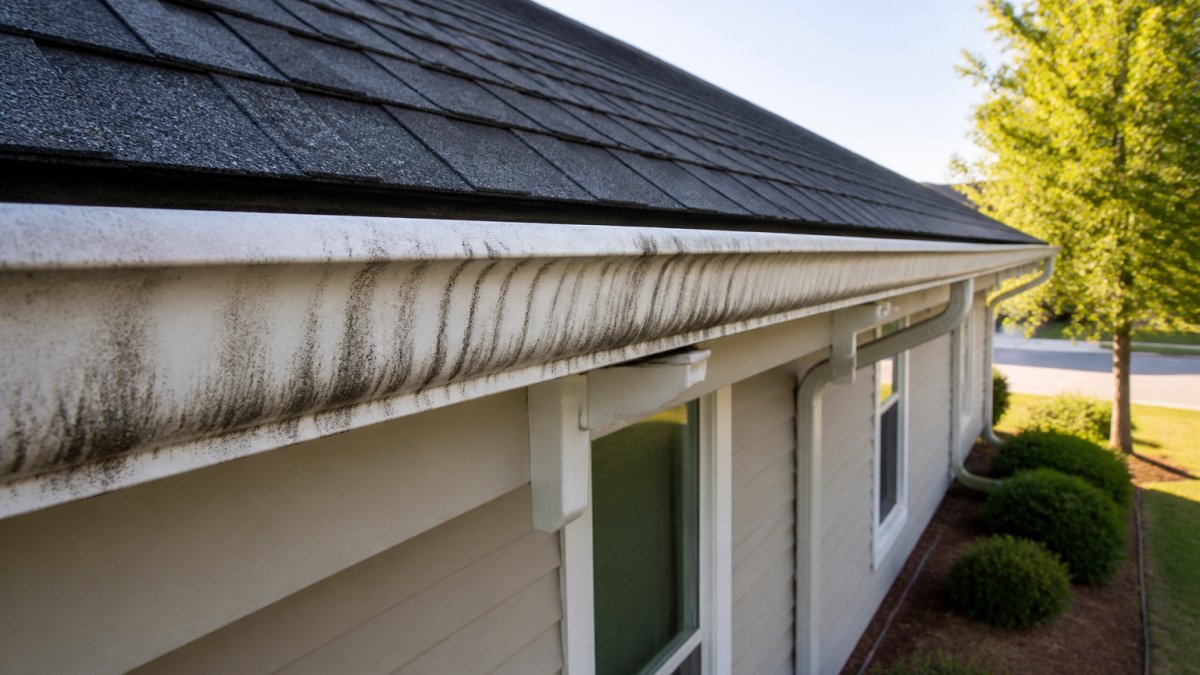
Clogged gutters are the quiet cause of a lot of "mystery" leaks. When water cannot drain, it backs up under the roof edge, saturates the fascia, and eventually works into the soffit and wall cavity. New England properties deal with this constantly thanks to leaf drop and the moss and algae that thrive in shaded, damp conditions.
If you are not sure whether yours are due, our guide on how to tell if gutters are clogged walks through the seven warning signs we look for on a first visit.
Early warning signs: a step-by-step leak detection walkthrough
Catching a leak early is mostly about knowing where to look, in the right order. Run this walkthrough twice a year, in spring and fall.
- Start inside, in the attic. With a flashlight, look for dark staining on the roof deck, damp insulation, and daylight showing through. Moisture buildup and musty smells point to a ventilation or entry problem.
- Check ceilings and walls on the top floor. Brown rings, bubbling paint, and peeling wallpaper are water that has already traveled.
- Walk the exterior perimeter at ground level. Look for curling shingles, granule loss in the gutters, and sagging lines along the roof pitch.
- Inspect flashing and seams at the chimney, vents, and skylights for lifted edges or cracked caulking.
- Check gutters and downspouts for granule sediment, standing water, and separation at the seams.
- Look for animal damage, including chewed fascia, nesting material, and droppings near entry points.
Watch out: never walk a roof yourself to complete this checklist. A fall from height is a serious injury, and walking aged shingles can cause the very damage you are trying to prevent. Do the interior and ground-level checks, then hand the roof surface to a professional.
A season-by-season roof maintenance checklist
A roof maintenance schedule works best when it follows the seasons rather than a calendar reminder. Here is the checklist we use as a starting framework for properties in Connecticut and Massachusetts.
| Season | Focus | What to check | Frequency |
|---|---|---|---|
| Spring | Storm damage | Lifted or missing shingles, flashing after freeze-thaw | Once, after the last freeze |
| Summer | Debris and growth | Moss, algae, tree limbs, gutter flow | Mid-season, plus after any major storm |
| Fall | Drainage | Gutter cleaning, downspout flow, leaf accumulation | Twice, before and after leaf drop |
| Winter | Ice and snow | Ice dams, icicles, interior staining after snowmelt | After each significant snow event |
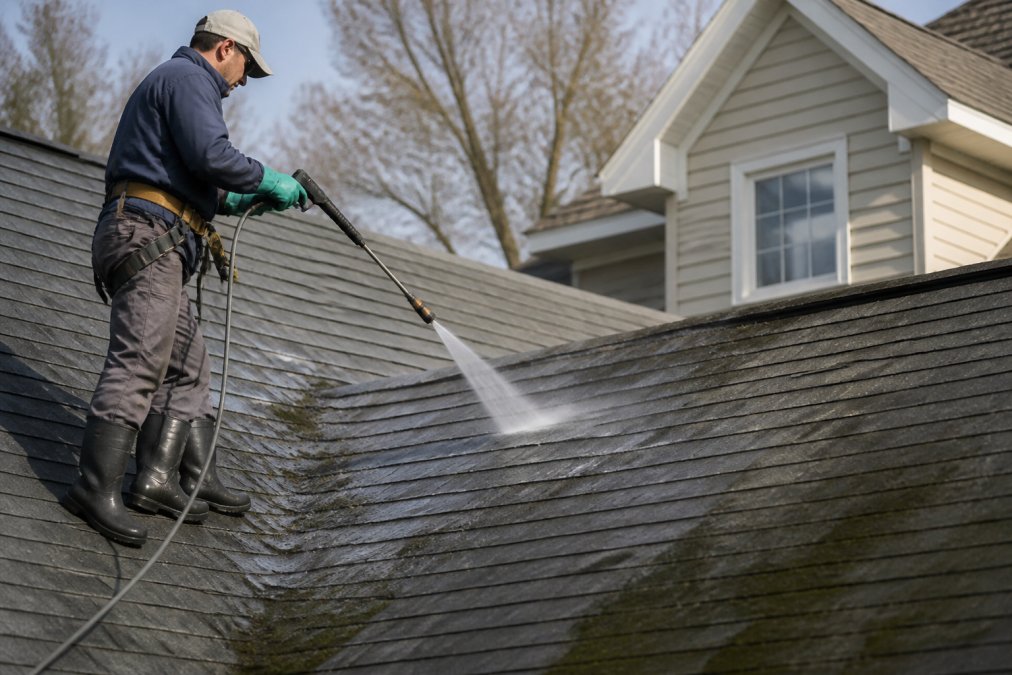
Two items on that list deserve a note. First, ice and water shield and proper attic ventilation are what protect a roofing system through winter, and neither can be added retroactively without roof work, so verify them during an inspection. Second, moss is not just cosmetic. It holds moisture against the shingle surface and shortens roof lifespan, which is why soft washing rather than pressure washing is the right call for older roofs.
What roof leak repair cost looks like when prevention fails
Most guides wave at the cost question without answering it. The honest way to frame prevention is not as a fixed price but as a range shift: maintenance keeps repairs in the low band, and neglect pushes them into the high band. Here is the mechanism behind that shift, and the specific line items that move a leak from one category to the other.
A leak that is caught at the flashing or seam stage is usually a reseal, a patch, or a shingle replacement in a localized area. A leak that has traveled, through the underlayment, into the sheathing, and down into the ceiling cavity, is a different job entirely. At that point the repair typically involves removing roofing material to expose the deck, replacing rotted sheathing, rebuilding the waterproofing layers, and then addressing the interior damage separately.
Maintenance is best understood as a way to keep eventual repairs smaller rather than to avoid all repairs.
A second number worth knowing: roughly one in three homeowners replaces a roof because of leaking, according to RubyHome's roofing statistics. That statistic matters because replacement is the terminal cost of a leak that was never caught. If you are weighing repair against replacement right now, our breakdown of alternatives to full roof replacement covers the options before you commit to the biggest line item in exterior maintenance.
A professional inspection with photos and a written condition report gives you a record to support later decisions, including repairs, warranty questions, and insurance conversations.
Does roof age affect home insurance and warranty coverage?
Roof age affects both insurance and warranty coverage, and the effect is not uniform across roof types. That is the part most guides miss: the maintenance that protects an asphalt shingle roof is not the maintenance that protects a metal roof or a flat EPDM membrane, and the coverage consequences of neglect differ by material as well.
Start with the mechanism. Insurers weigh roof age and condition because age is a proxy for remaining service life, and condition is a proxy for how well the roof has been maintained.
Now the material-specific layer, which is where maintenance actually earns its keep:
Asphalt shingles. The maintenance priorities are granule loss, curling, and flashing seals. Granule loss is visible as sediment in the gutters, and it signals that the shingle surface is thinning. Curling and lifted edges at the rake and eave are the early failure points. Flashing at chimneys, vents, and skylights is the highest-yield inspection target on this roof type, because a reseal there is cheap and a deck repair underneath is not. Moss and algae hold moisture against the shingle surface and shorten service life, which is why soft washing rather than pressure washing is the right call on older shingles.
Metal roofs. The maintenance priorities are fastener tightness, seam condition, and coating integrity. Loose fasteners back out over thermal cycling and become water entry points; seams and panel edges are where sealant fails first. Metal roofs also collect debris in the pan between ribs, which traps moisture and accelerates corrosion.
Flat and low-slope EPDM membranes. The maintenance priorities are seam integrity, ponding water, and membrane punctures. Ponding water is the signature failure mode on low-slope roofs, and it stresses seams and accelerates membrane degradation. Seams are the most common entry point, and a seam that is lifting is a reseal now versus a membrane replacement later.
The common thread across all three: maintenance is material-specific, and a generic 'check the roof once a year' routine does not capture the failure modes that actually matter on your roof type.
DIY vs. professional maintenance: where the real safety risks sit
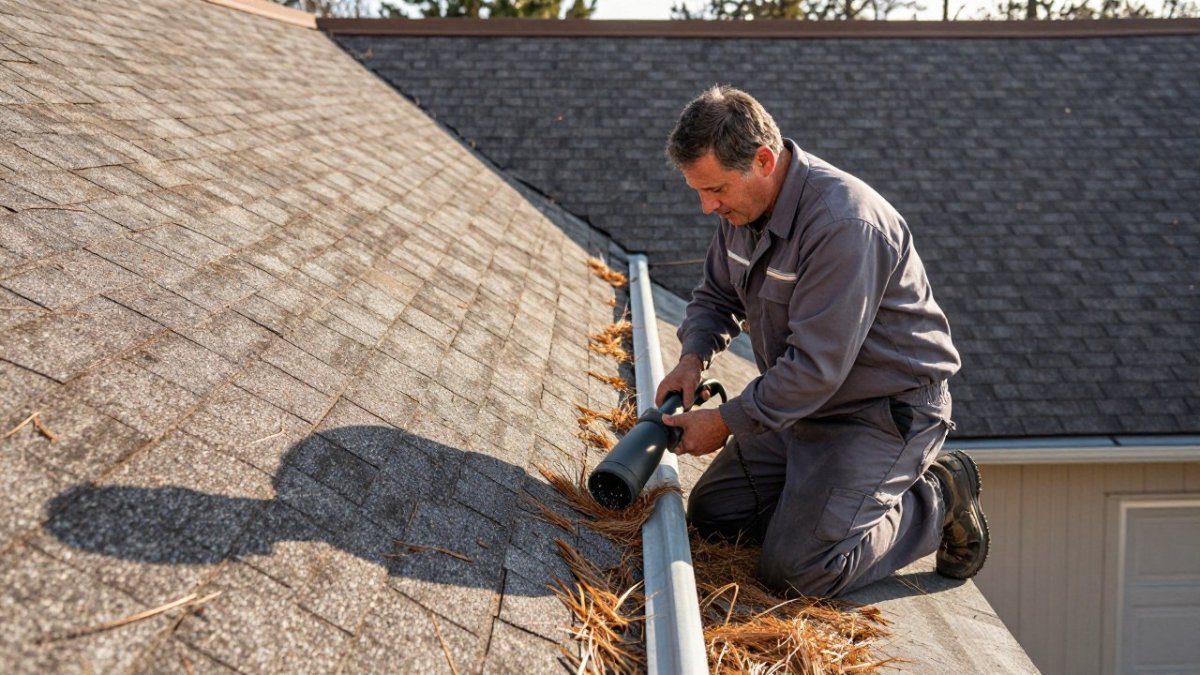
Some roof maintenance is genuinely safe to do yourself. Gutter cleaning from a stable ladder, clearing debris from the ground with a leaf blower, and interior attic checks are all reasonable DIY tasks. Know your limits and stay off the roof surface.
The risks that send people to the hospital are the ones people underestimate: ladder work at the gutter line, walking a pitched roof, and leaning out to reach a chimney. Add in the damage risk from pressure washing aged shingles, and the DIY calculation changes. Temporary caulk or sealants are generally not a substitute for professional repair of a leak.
Inspect from the ground and the attic when you can do so safely, and leave roof surface work to a qualified professional.
Scheduling your first professional roof tune-up
The first professional visit should accomplish three things: a full inspection with photos, a written record of current condition, and a maintenance plan you can actually follow. That baseline is what makes every future decision easier, from warranty questions to insurance paperwork.
If you are ready to book, you can schedule a roof tune-up with our team, or contact us to plan your first visit if you would rather talk through what your roof needs first. We serve homeowners across Connecticut and Massachusetts with roof cleaning, soft washing, and gutter cleaning built for lasting results.
Most homeowners call a professional after the ceiling stains appear, which is the most expensive moment to start. Roof Tune Up exists to move that call earlier, with professional roof cleaning, soft washing, and gutter cleaning engineered for permanence and delivered by a team that treats your roof like a long-term asset. Get started with Roof Tune Up and put a maintenance plan in place before the next storm season.
Frequently Asked Questions
How often should you do maintenance on your roof?
Most roofs benefit from a professional inspection twice a year, ideally in spring and fall, plus a check after any major storm. Between visits, clear debris from gutters and look for curling shingles or granule loss from the ground. Roofs surrounded by trees or prone to moss and algae may need more frequent attention. A written roof maintenance schedule keeps the work consistent rather than reactive.
Are roof cleaning and maintenance services worth the cost?
Regular maintenance can help reduce leak risk and preserve shingle integrity. Pricing for professional roof cleaning and gutter service depends on roof size, pitch, and condition, so request a quote for current rates.
Can maintenance guarantee my roof will never leak?
No. GAF advises contacting a roofing contractor as soon as signs of a leak appear and treats regular maintenance and inspections as ways to prevent future leaks, not as a substitute for repairing an existing one. Maintenance lowers risk by catching flashing failures, clogged drainage paths, and damaged shingles early, but an active leak still needs professional assessment and repair.
Does roof age affect home insurance eligibility?
Roof age often factors into how insurers evaluate a home, and older roofs may face closer scrutiny or different coverage terms. Keeping maintenance records, including professional inspections and roof cleaning, gives you documentation that the roofing system has been cared for. Check with your insurer on how they treat roof age and condition, since underwriting rules vary by carrier and policy.