 How-to
How to Tell If Gutters Are Clogged: 7 Warning Signs
Last Updated: November 21, 2026
Quick Summary
You can learn how to tell if gutters are clogged from the ground during a steady rain: watch for water spilling over the gutter lip, a downspout that trickles instead of gushing, or water running down the siding. A tap test with a long pole and a hose flush test confirm the blockage without climbing a ladder.
- Water spilling over the gutter lip in a sheet means the channel itself is packed with debris.
- A dull thud from tapping the gutter bottom with a long pole signals debris packed in that section.
- Never push a hose full-blast into a clogged downspout, because pressure can pop a joint apart.
- Sagging gutter runs are a structural warning, since wet leaves are heavy and pull hangers loose.
- Clear debris from the roof down, never from the gutter up, and scoop leaves out by hand with gloves on.
Table of Contents
- Start With a Ground-Level Look at Your Gutters
- The Most Common Signs of Clogged Gutters
- Testing Clogged Gutters and Downspouts From the Ground
- Telling a Gutter Clog Apart From Other Drainage Problems
- What Kind of Damage Can Clogged Gutters Cause
- How to Unclog Gutters Safely, or When to Stop and Call a Pro
- Schedule a Professional Gutter Inspection Before the Next Storm
- Frequently Asked Questions
Start With a Ground-Level Look at Your Gutters
You can learn how to tell if gutters are clogged without climbing a ladder. Most of the evidence shows up at ground level, and it shows up fastest during a steady rain.
Wait for a normal rain, not a downpour. Then walk the perimeter of the house and watch the water.
A healthy gutter system does three things. It catches rainwater off the roof edge, moves it to the downspout, and dumps it well away from the foundation. If any of those steps fails, you have a gutter blockage somewhere.
What to Watch For During Heavy Rain
Heavy rain is the best test because it pushes the system to its limit.
- Water spilling over the edge of the gutter in a sheet
- A downspout that trickles instead of gushing
- Water running down the siding instead of through the gutter
- Rainwater pooling in a ring on the ground near the foundation
If water spills over the front lip of the gutter, the channel itself is likely packed with debris. If the gutter looks empty but the downspout barely flows, the clog is lower down. That distinction saves you a lot of guessing.
The Most Common Signs of Clogged Gutters
The most common signs of clogged gutters are water overflow, stains on the siding, sagging, and plant growth in the channel. Most homeowners spot at least two of these before they ever think about calling someone.
Not every symptom carries the same risk. Sort what you see into three tiers so you know how fast to act.
Tier 1: Fix This Weekend
These signs mean the clog is active but the structure is still sound. A cleaning and a flow check usually resolve them.
- Water spilling over the gutter lip in a sheet. The channel is packed and water is bypassing the system entirely.
- A downspout that trickles instead of gushing. The outlet or the run below the gutter is blocked.
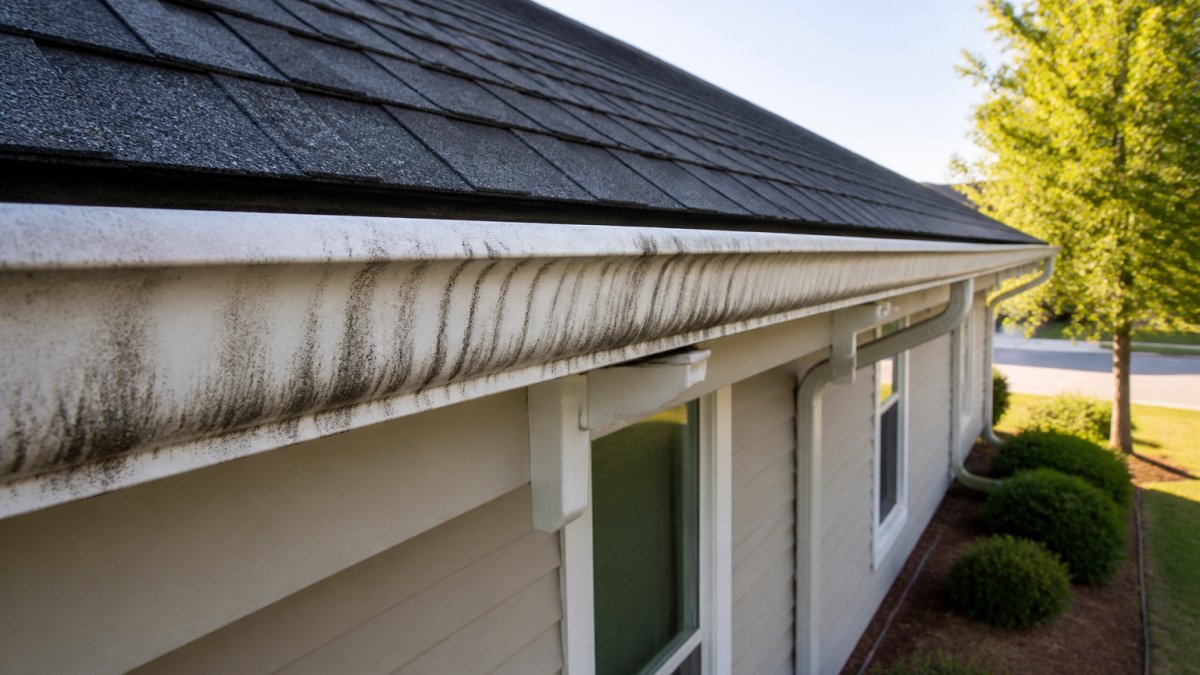
- Dark streaks or water stains on the siding under the gutter line. Exterior water damage that worsens with every storm.
- Grass, weeds, or moss sprouting from the channel. Enough soil-like debris has built up to support roots.
- Mosquitoes or wasps gathering at the roof edge. Standing water and debris are providing habitat.
Tier 2: Schedule Help Within Days
These signs suggest the clog has been sitting long enough to stress hardware or push water where it shouldn't go.
- Sagging or drooping gutter runs. A channel full of wet leaves is heavy, and the weight pulls hangers loose. Sagging is a structural warning, not a cosmetic one.
- Rust spots or seams pulling apart. Water is sitting in the channel long enough to corrode metal and stress joints.
- Puddles in a ring on the ground near the foundation. Overflow is landing at the base of the house instead of being carried away.
- Soil erosion or undercut walkways at one corner. A steady stream off a single low point is washing away soil.
Tier 3: Stop and Get Professional Help
These signs mean water has already reached materials that rot or spaces that flood. Don't climb up to investigate; call someone.
- Damp basement or crawl space after rain. Water that pools at the foundation has found cracks and is seeping in.
- Soft or crumbling fascia board behind the gutter. The wood is rotting, and the gutter may be hanging from compromised material.
- Water running down the siding in a wide sheet during rain. The system has failed beyond a simple channel clog.
- Gutters pulling away from the fascia. The fasteners have lost their grip, and the run may be close to detaching.
A common pattern is that homeowners wait until a Tier 1 sign becomes a Tier 3 sign. A clog caught in its first season is a cleaning job. A clog ignored for two years is often a repair job that involves fascia, siding, or foundation work. When you spot a Tier 1 sign, treat the weekend cleaning as the deadline, not the suggestion.
Testing Clogged Gutters and Downspouts From the Ground
You can confirm a gutter blockage without leaving the ground.
The tap test. Use a long pole or the handle of a broom to tap the bottom of the gutter run.
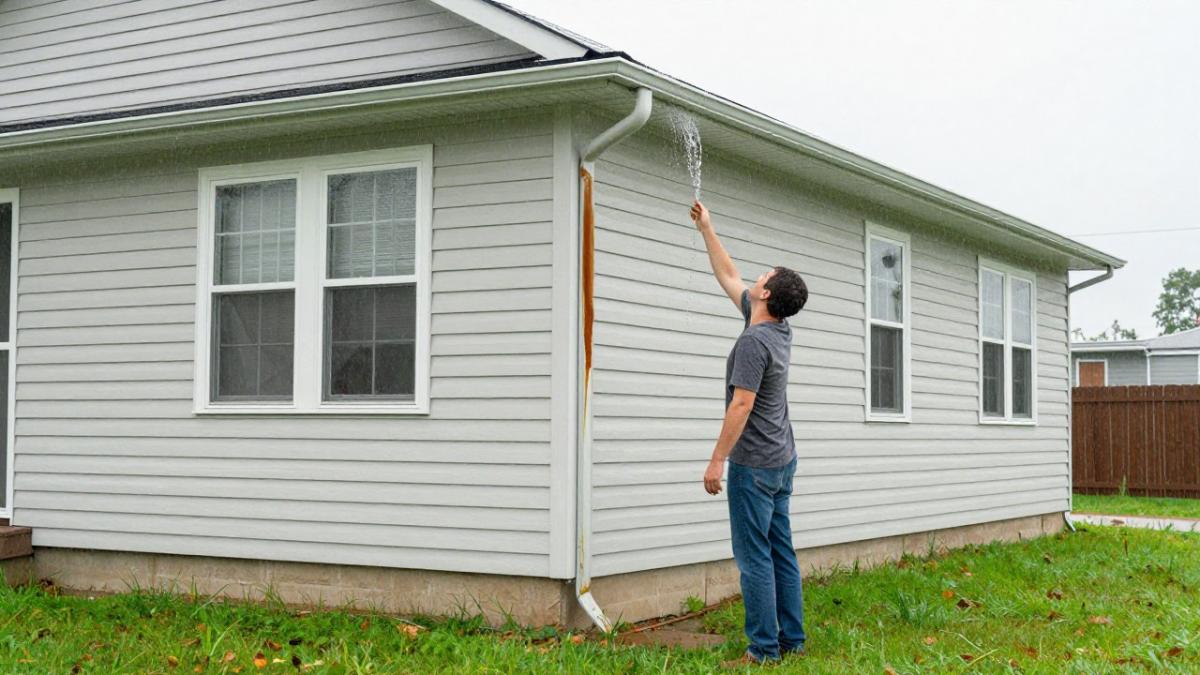
The flush test. Feed a garden hose into the gutter near the downspout and run water at moderate pressure.
The downspout flow test. This is the test that tells you where the blockage sits, not just whether one exists. Disconnect the downspout at the lowest joint you can safely reach, or watch the outlet from the ground while a helper runs water into the top of the downspout. Read the result this way:
- Water flows freely at the bottom. The downspout is clear, and the problem is in the gutter channel or the transition fitting at the top.
- Water backs up at the top but nothing reaches the bottom. The blockage is inside the downspout run, usually at an elbow or the first offset.
- Water reaches the bottom but drains slowly. A partial blockage, often a nest or compacted grit, is restricting flow without stopping it.
- Water leaks at a joint instead of reaching the bottom. The joint has separated or the downspout is cracked, and the clog may be downstream of the leak.
Watch out: never push a hose full-blast into a clogged downspout.
If the tap test and the flush test disagree, trust the flow test.
Telling a Gutter Clog Apart From Other Drainage Problems
Not every puddle near the house is a gutter problem. Before you clean anything, rule out the other suspects.
A gutter clog usually shows water spilling from the gutter itself or running down the siding.
Here is how to sort them out:
| What You See | Likely Cause | What to Do |
|---|---|---|
| Water over the gutter lip | Gutter blockage | Clear the channel |
| Gutter clear, downspout trickles | Downspout blockage | Flush or snake the downspout |
| Puddle at the downspout outlet | Water dumped too close to the house | Extend the outlet away from the foundation |
| Damp basement or crawl space | Ground slope or foundation drainage | Check grading and downspout extensions |
| Stains high on the siding | Overflow from a clog | Clean the gutter, inspect the fascia |
If the gutter is clean and flowing but the basement still gets damp, the problem is not the gutter. Adding extensions to the downspout outlets is the usual first fix.
What Kind of Damage Can Clogged Gutters Cause
Clogged gutters cause damage that starts small and gets expensive. The water has to go somewhere, and it usually goes where you least want it.
- Foundation damage. Overflow lands right at the base of the house, and foundation pooling softens soil and stresses the walls.
- Basement dampness. Water that pools at the foundation finds cracks and seeps into the basement or crawl space.
- Soil erosion. A steady stream off one corner washes away soil and can undercut walkways or plantings.
- Fascia and roof edge rot. Water sitting against the fascia board rots the wood behind the gutter.
- Siding and paint damage. Repeated overflow stains siding and shortens its life.
The pattern is always the same: the longer the blockage sits, the further the water travels. A clog caught in its first season is a cleaning job. A clog ignored for two years is often a repair job.
How to Unclog Gutters Safely, or When to Stop and Call a Pro
Clearing a gutter is safe when you can reach it from the ground or from a stable ladder on flat ground.
If you are cleaning it yourself, follow this order:
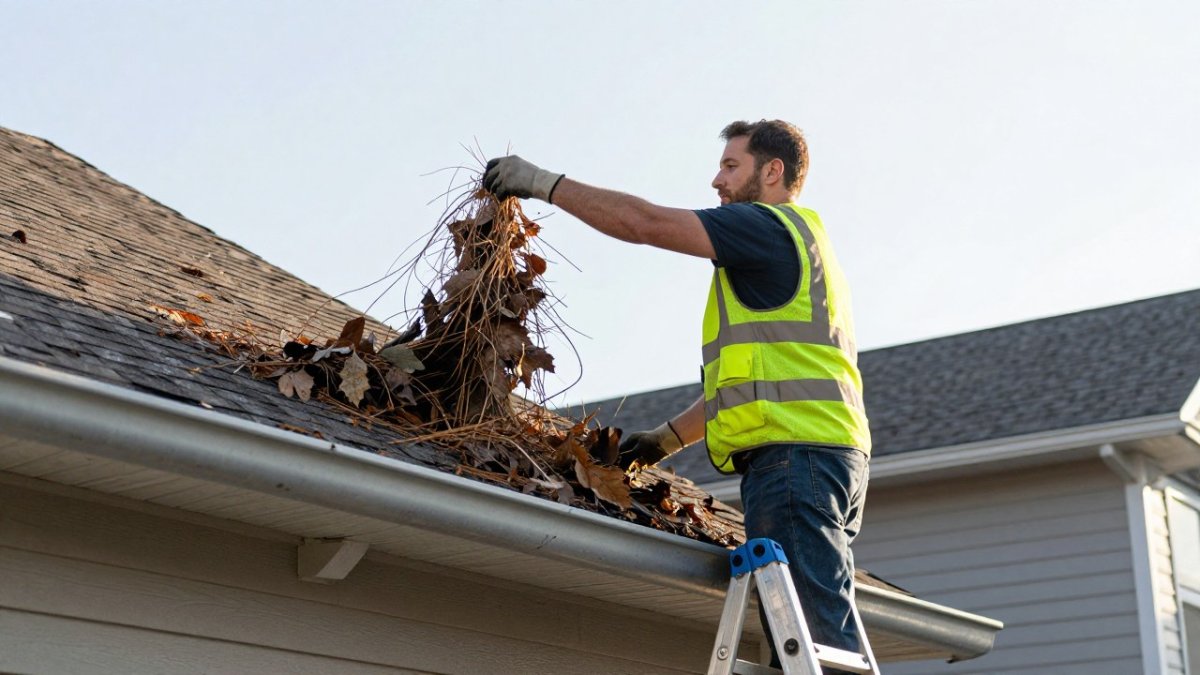
- Clear debris from the roof down, never from the gutter up.
- Scoop leaves and twigs out by hand with gloves on.
- Flush the channel with a hose toward the downspout.
- Clear the downspout outlet from the bottom first.
- Check the water flow at the bottom before you climb down.
Watch out: never stand on the top two rungs of a ladder, and never work alone on a roof edge. Falls are the real danger here, not the leaves.
Stop and call a professional if any of these apply:
- The clog is on a second story you cannot reach safely
- The gutters are sagging or pulling away from the fascia
- You see rot, rust-through, or separated seams
- Water has already reached the basement or crawl space
For homeowners who would rather hand off the whole job, professional roofing services built to last can be a starting point for learning more about exterior maintenance options.
Schedule a Professional Gutter Inspection Before the Next Storm
A gutter inspection is cheap insurance compared with foundation repair.
Seasonal timing matters. In New England, the heaviest debris loads come after fall leaf drop and again after spring storms.
If you want a trained eye on the roof edge and the gutters before the next storm, book an inspection and get the system checked end to end. To confirm service in your area first, check coverage before you schedule.
A clogged gutter is easy to ignore until the water finds your foundation. Roof Tune Up provides professional gutter cleaning and inspection across Connecticut and Massachusetts, with services engineered for permanence and results built to last.
Frequently Asked Questions
How do I know if my gutters are clogged without getting on a ladder?
Watch the system during a steady rain. Water spilling over the front edge, a downspout that releases only a trickle, or dark streaks running down the siding all point to a blockage. On a dry day, look for debris sitting above the gutter line, sagging sections, or plants sprouting from the channel. A tap test with a long pole lets you feel for solid debris while staying on the ground, and a garden hose run into the downspout outlet shows whether water drains freely.
What are the clearest signs of clogged gutters I should not ignore?
The strongest signs of clogged gutters are overflow during rain, water pooling against the foundation, stained or streaked siding, gutters pulling away from the fascia, and visible plant growth in the channel. Pest activity near the roof edge, such as mosquitoes or nesting insects, is another warning. Any two of these together usually means a real blockage rather than a minor slowdown, and it is worth scheduling an inspection before the next heavy storm.
Can clogged gutters and downspouts cause basement water or ceiling leaks?
Yes. When clogged gutters and downspouts cannot carry rainwater away, water dumps next to the foundation instead. That saturates the soil, increases hydrostatic pressure against basement walls, and can show up as dampness in the basement or crawl space. Water that backs up under the roof edge can also work beneath shingles and appear as a ceiling stain. Clearing the blockage restores the drainage path and removes the source of the moisture.
How do I unclog gutters, and when should I stop and call a professional?
For a light blockage, scoop debris out by hand with gloves, then flush the channel with a hose from the high end toward the downspout. Clear the downspout with a plumber's snake or a hose fed from the top. Stop and call a professional if the clog sits deep in the downspout, if gutters are loose or pulling from the fascia, if the roofline is steep or more than one story, or if you are not comfortable on a ladder. A pro can clear the blockage and check for damage at the same time.