 How-to
How to Clean Metal Roofs Safely: A Step-by-Step Guide
Last Updated: November 22, 2026
Quick Summary
To clean metal roofs safely, stay off the panels whenever possible and work from the ground with a long-handled soft brush, a pump sprayer, and mild detergent at 1/4 cup per gallon of water. If you must walk the roof, use a rated harness and anchor, tie off the ladder, keep a spotter in place, and never use pressure washing, bleach, or abrasive pads on painted panels.
- Plan access before cleaning, since most metal roof injuries happen during access, not scrubbing.
- Walk parallel to the ribs and keep your weight on the flat of the panel between ribs.
- A solution of 1/3 cup powdered laundry detergent, 1 quart of 5% bleach, and 3 quarts of water suits painted metal.
- Letting soap dry on a warm panel leaves streaks that are harder to remove than the original dirt.
- Never use steel wool, wire brushes, or abrasive pads, because the scratches they leave are permanent.
Table of Contents
- Safety First: Fall Prevention and Access Planning
- Choosing the Best Chemical to Clean Metal Roof
- How to Clean Metal Roof from the Ground
- Step-by-Step: How to Clean Metal Roofs Safely
- How to Clean Metal Roof with Mildew and Stains
- Do's and Don'ts of Metal Roof Cleaning
- Book a Professional Roof Cleaning Assessment
- Frequently Asked Questions
Safety First: Fall Prevention and Access Planning
Most metal roof cleaning injuries do not happen during scrubbing. They happen during access, when someone steps from a ladder onto a wet panel or leans too far to reach a streak. Falls are a leading cause of death in construction and maintenance work, and a metal roof raises the stakes because the surface offers little grip once it is damp. Plan the access before you plan the cleaning.
Decide first whether anyone should be on the roof
Walking the roof is not the default. Stay off the panels and work from the ground or call a professional when any of these are true:
- The pitch is steep enough that you cannot stand without leaning into the slope
- Panels are wet from dew, rain, or overnight condensation
- The roof is older, heavily chalked, or has visible rust at fasteners
- Wind is strong enough to move a ladder or push you off balance
- You cannot identify a solid anchor point for fall protection
- You are working alone, or your spotter is not paying attention
Roofs that look easiest from the ground can punish overconfidence. A low-slope painted panel in dry, calm weather may be a reasonable DIY job. A steep, dew-covered panel is not.
How fall protection actually works
A harness is not a magic safety device. It only works when it is anchored to a point rated for the load and when the lanyard is short enough to stop a fall before you hit the edge or the ground.
If you do go up, a minimum safe setup includes:
- A full-body harness, not a waist belt
- An anchor point rated for fall arrest, such as a manufactured roof anchor installed per the manufacturer's instructions
- A lanyard or self-retracting lifeline short enough that a fall cannot reach the roof edge
- A spotter on the ground who can call for help and steady the ladder
- A ladder tied off at the top and set on firm, level ground at the correct angle
Watch out: a harness clipped to a gutter, a vent pipe, or a chimney is not fall protection. Those points are not rated for a fall load and can tear free.
Ground-based and professional alternatives
For most single-story and many two-story roofs, the ground method covered below reaches the lower panels, the gutter line, and the visible face of the roof without anyone climbing. A long-handled soft brush, a pump sprayer, and a garden hose handle dirt, dust, and light algae on the panels you can safely reach from a ladder placed at the eave, not from the roof surface.
When the upper roof needs work, the safer path is a professional who carries fall protection, roof-specific cleaning equipment, and insurance.
Protect the roof surface while you are on it
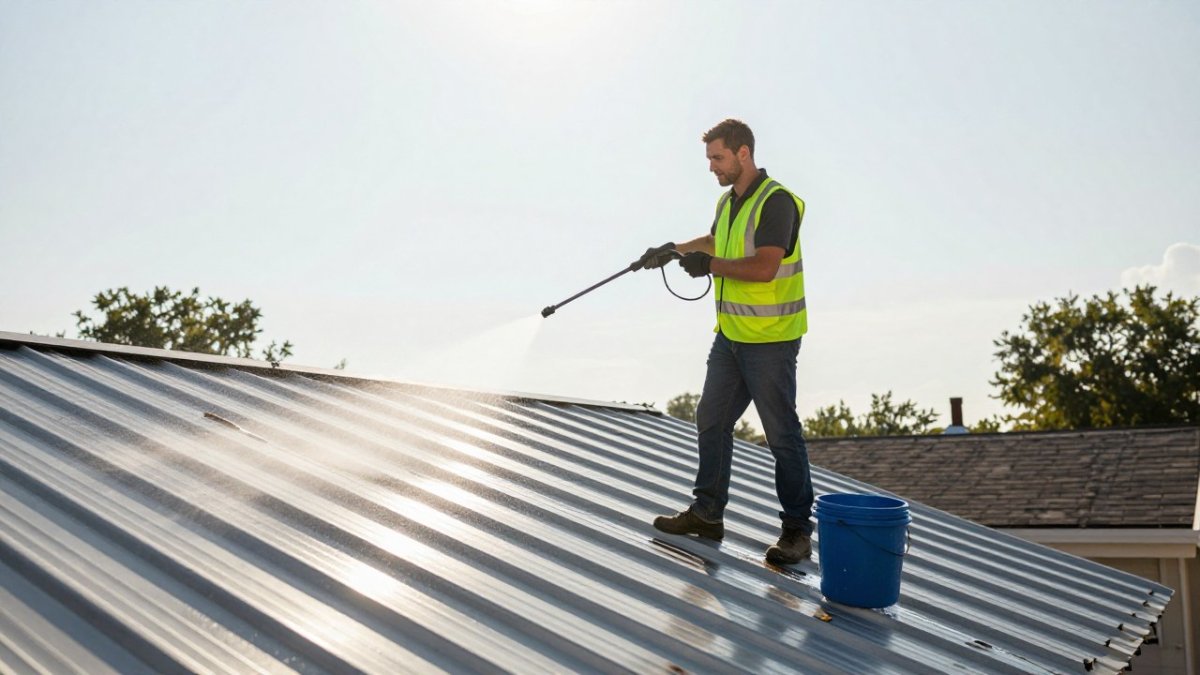
If you do walk the panels, keep your weight on the flat of the panel between ribs, never on the raised seam or rib itself. Walk parallel to the ribs, not across them. Wear soft-rubber-soled shoes that are clean of grit, because a single piece of gravel under a shoe can scratch a painted finish. Never walk backward, never carry a bucket in one hand while climbing, and never step onto a panel you have just sprayed.
Choosing the Best Chemical to Clean Metal Roof
The best chemical to clean a metal roof is a mild one.
That bleach ratio is where experts split. Some sources warn against bleach, ammonia, and acidic cleaners entirely, because they can corrode fasteners and dull the finish.
Todd Miller, President at Isaiah Industries, puts it plainly in the company's cleaning video:
"In the case of metal, less is more. You want to avoid anything that could scratch or damage the finish."
Never mix bleach and ammonia. Never use an acidic cleaner on bare or painted panels. If you want the soft-wash route handled properly, see the professional soft washing option.
How to Clean Metal Roof from the Ground
Many homeowners can clean a metal roof from the ground, which avoids climbing. A long-handled soft brush and a pump sprayer let you reach the lower panels and gutter line without a ladder.
Here is how to clean a metal roof from the ground:
- Fill a plastic pump sprayer with warm water and mild dish soap
- Spray the lower panels until the surface is wet, not soaked
- Scrub gently with a long-handled soft-bristled brush
- Rinse with a garden hose from the top down
- Repeat on stubborn spots, letting the soap sit a few minutes first
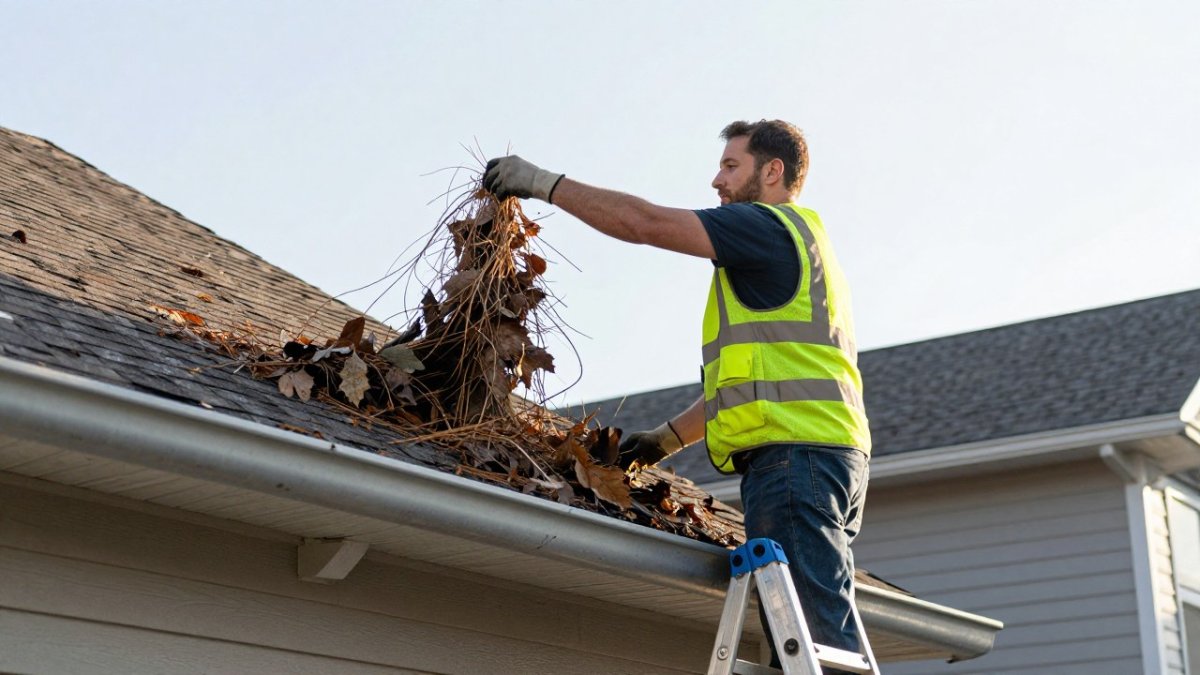
This method handles dirt, dust, and light algae on the panels you can safely reach. For the upper roof, call a pro. Cleaning sends debris into the gutters, so plan to have the gutters cleaned out at the same time.
Step-by-Step: How to Clean Metal Roofs Safely
Here is a full process for cleaning a metal roof. Total time varies with roof size and condition.
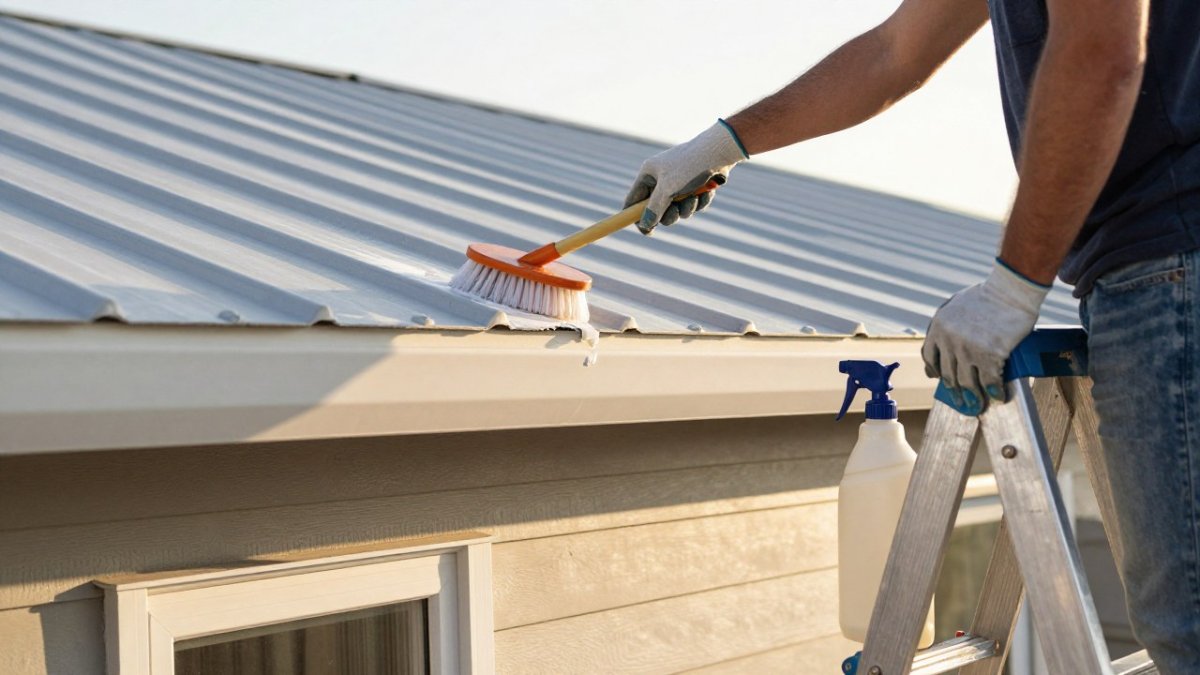
What you'll need: soft-bristled brush, sponge or washcloth, plastic pump sprayer, garden hose, mild detergent, rubber-soled shoes, ladder, harness, and a ground spotter.
- Check the weather. Pick a dry, calm day with no rain in the forecast.
- Set up safe access. Tie off the ladder and put your spotter in place.
- Mix your solution. Use 1/4 cup mild detergent per gallon of water.
- Spray a small test patch. Confirm the cleaner does not dull the finish.
- Work top to bottom. Wet, scrub gently, and let the soap lift the dirt.
- Rinse thoroughly. Wash all soap off before it dries on the panels.
- Inspect fasteners, rivets, and seams. Note anything loose or lifting.
Watch out: letting soap dry on a warm panel leaves streaks that are harder to remove than the original dirt.
| Step | Time | Frequency |
|---|---|---|
| Weather check and setup | 15 min | Every cleaning |
| Mix and test patch | 10 min | Every cleaning |
| Wash and scrub | 45-60 min | Twice a year |
| Rinse and inspect | 15 min | Every cleaning |
Time
How to Clean Metal Roof with Mildew and Stains
Not every mark on a metal roof is mildew, and treating the wrong stain wastes time and can damage the finish. Before you mix a cleaner, identify what you are looking at. The table below is the decision guide most cleaning articles skip.
| What you see | Likely cause | What to do |
|---|---|---|
| Black or dark green streaks running down from seams and fasteners | Algae or mildew feeding on moisture and dirt | Mild detergent, gentle scrub, thorough rinse; repeat if streaks return |
| Rust-colored marks around fasteners or cut edges | Corrosion of the fastener or panel edge | Cleaning will not fix it; have the fasteners and sealant inspected |
| White, chalky powder that rubs off on your hand | Oxidation or coating breakdown | Gentle wash only; plan for recoating or repainting |
| Blistering, peeling, or flaking paint | Paint failure, often from trapped moisture | Do not scrub; consult a roofing professional about repair |
| Uniform gray dulling across the panel | Normal weathering of the finish | Mild wash restores some gloss; do not use abrasives |
| Brown or orange stains below vents or penetrations | Runoff from a failing component above | Clean the panel, then fix the source |
Cleaning mildew and algae
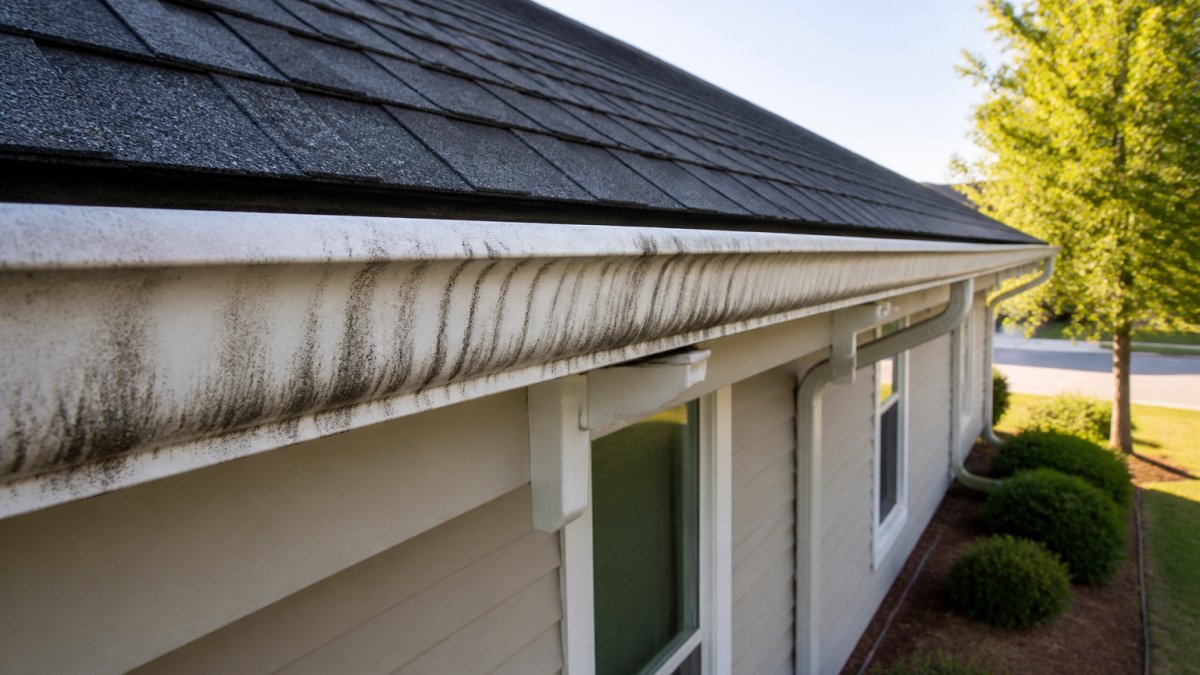
Mildew and algae show up as dark streaks that run down from seams and fasteners. They feed on moisture and dirt, so plain scrubbing often spreads them instead of removing them.
If streaks return within a few weeks, the growth is rooted deeper than surface cleaning reaches. That is when a professional soft wash, which uses low pressure and a cleaning solution designed for the finish, makes the difference.
Cleaning rust and oxidation
Rust-colored marks near fasteners are a warning, not a cleaning problem. Cleaning removes the stain but not the corrosion underneath, and scrubbing rust can spread it. White chalky patches mean the coating is breaking down, and aggressive cleaning accelerates that. In both cases, wash gently, rinse well, and have the roof inspected before you spend more time on appearance.
Watch out: never use steel wool, wire brushes, or abrasive pads on a metal roof. They leave scratches that trap dirt and start corrosion, and the damage is permanent.
When to stop cleaning and call a professional
Consider a professional if the stain does not change after a gentle wash, if rust or paint failure is visible, if the streaks cover a large portion of the roof, or if the roof is steep or wet. A professional assessment can distinguish a cleaning job from a repair job.
Do's and Don'ts of Metal Roof Cleaning
- Do use mild detergent, dish soap, or car-washing soap
- Do use soft-bristled brushes, sponges, and non-abrasive pads
- Do rinse from the top down and protect your landscaping below
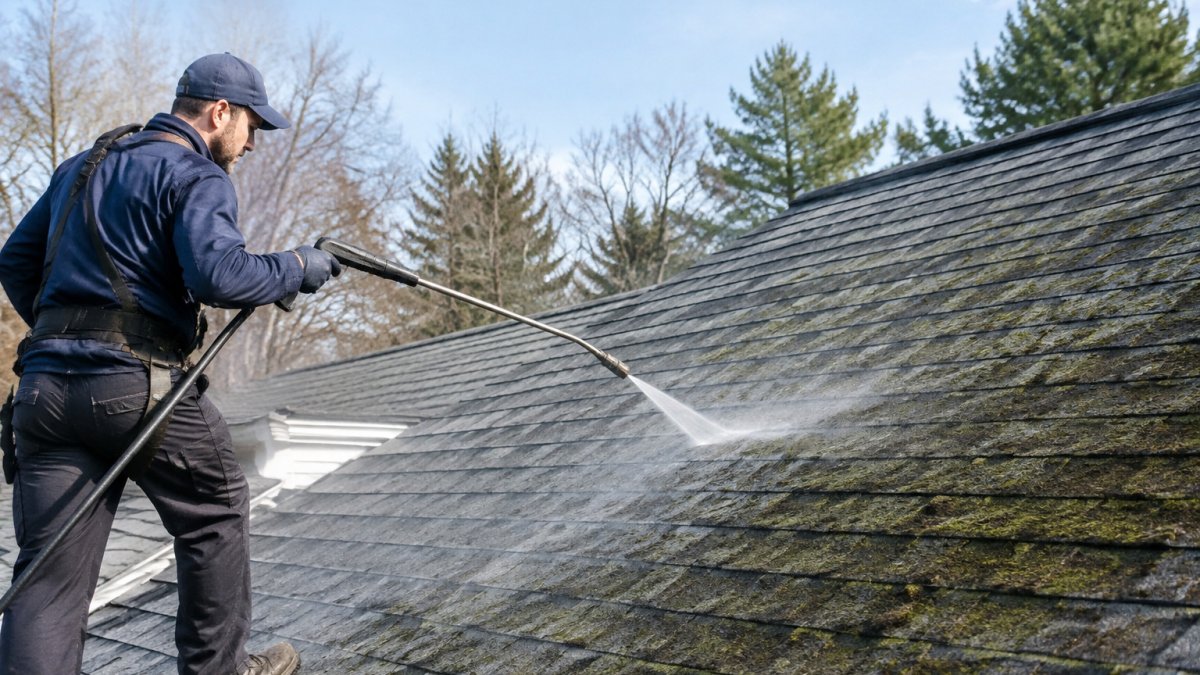
- Don't pressure wash, which can strip coatings and force water under seams
- Don't use bleach, ammonia, or acidic cleaners on painted panels
- Don't scrub hard or use steel wool, which scratches the finish
- Don't clean a wet roof or work alone on a ladder
Pressure washing is a common mistake. It looks fast, but it can cause damage such as corrosion and paint failure over time. If a roof is already failing, cleaning alone may not fix it. Read about alternatives to full roof replacement before you spend on a wash.
Book a Professional Roof Cleaning Assessment
Some jobs are worth doing yourself. A steep pitch, heavy mildew, or an older roof may call for a professional. A pro assessment tells you what the roof actually needs and whether cleaning is enough.
Roof Tune Up provides roof cleaning, soft washing, gutter cleaning, and house washing across Connecticut and Massachusetts, all built to last. If you are ready to stop guessing, request a professional roof cleaning assessment and get a clear plan for your roof.
A roof that streaks, sheds dirt into the gutters, or shows mildew after every rain is telling you something. Instead of climbing up with a brush and hoping, let Roof Tune Up take a look.
Frequently Asked Questions
What do professionals use to clean metal roofs?
Professionals typically use a mild detergent solution, such as 1/4 cup of mild detergent per gallon of water, applied with a plastic pump sprayer and a soft-bristled brush. For painted metal roofs, some guidance suggests a stronger bleach-based mix, though bleach can dull finishes and corrode fasteners. Professionals also rely on soft washing methods and avoid pressure washing, which can damage the roof finish and coatings.
Can you use Dawn to clean a metal roof?
Dawn dish soap is a mild detergent that can be used to clean metal roofs when diluted properly. A mixture of 1/4 cup of mild detergent per gallon of water is a common starting point for general cleaning. Always rinse thoroughly and avoid abrasive scrubbing, since anything that scratches the finish can cause damage.
How do you clean a metal roof without slipping?
To clean a metal roof without slipping, wear shoes with soft rubber soles that grip the metal surface, and avoid walking on wet panels. Use a safety harness anchored to a secure point, and keep both hands free by using long-handled tools from a stable ladder or from the ground. Clean in dry conditions, apply solution in small sections, and never stand on a wet or soapy roof. For steep or high roofs, cleaning from the ground with a telescoping brush and sprayer is the safest approach.
Should metal roofs be cleaned?
Yes, metal roofs should be cleaned periodically to remove dirt, debris, algae, and mildew that can trap moisture and degrade the finish. Regular cleaning can help maintain curb appeal and may help protect the roof coating. Professional roof cleaning can help with safety, and some owners consider it when protecting a roof warranty. Cleaning frequency depends on local conditions, tree cover, and staining, but some homeowners schedule cleanings annually or as needed to reduce buildup.