 How-to
Do Gutter Guards Prevent Ice Dams? The Honest Answer
Last Updated: November 26, 2026
Quick Summary
No, gutter guards do not prevent ice dams, because ice dams are caused by heat escaping through the roof, not by debris in the gutters. A guard keeps leaves and pine needles out of the trough but does nothing to stop the freeze-and-refreeze cycle that builds ice along the eaves.
- Ice dams need three conditions: snow on the roof, heat from below, and cold at the eaves.
- Seal air leaks first, since it is usually the lowest-cost, highest-impact step.
- Most homes need guards checked once or twice a year, plus after any big storm.
- Solid-cover guards can give meltwater a flat surface to pool and refreeze at the cold edge.
- Never chip ice with an axe or hammer, and never climb onto a snowy roof.
Table of Contents
- Do gutter guards prevent ice dams?
- How ice dams form on roofs
- How to prevent ice dams in gutters
- Do gutter guards cause ice buildup?
- Best gutter guards for snow and ice
- Do gutter guards need to be cleaned?
- When guards make ice-dam removal harder
- Book a pre-winter roof and gutter inspection
- Frequently Asked Questions
Do gutter guards prevent ice dams?
No. Gutter guards do not prevent ice dams, because ice dams are caused by heat escaping through the roof, not by debris in the gutters.
A common pattern in winter is a homeowner who installs guards, feels protected, and then watches an ice ridge form anyway.
The honest answer: if your goal is fewer clogs, guards help. If your goal is no ice dams, guards are the wrong tool.
What a guard actually does
A gutter guard is a cover that sits over the open trough of your gutter. It lets water in and keeps large debris out.
- Mesh guards use a fine screen to block leaves and pine needles.
- Screen guards use a perforated metal or plastic sheet.
- Solid-cover guards use a curved surface that sheds debris off the edge.
Each design solves the same problem: keeping the channel clear so water can drain to the downspouts. Clear gutters move water away from your roof edge, siding, and foundation.
But a guard is a debris barrier, not a heating or ventilation fix.
How ice dams form on roofs
Ice dams form when heat escaping through the attic melts snow on the upper roof, and that meltwater refreezes at the cold eaves.
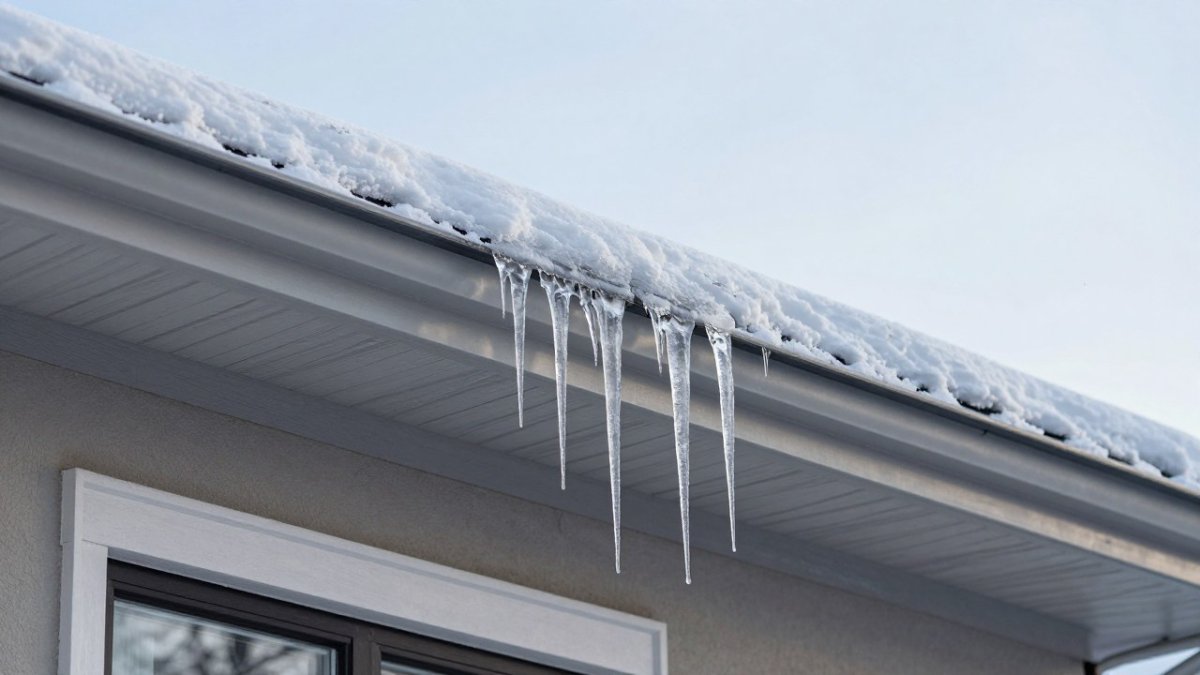
Picture the roof in three zones. The upper sections stay warm from heat rising below; the eaves stay cold because they hang past the heated wall. Snow melts up top, runs down, and freezes at the bottom. Repeated over a few days, this cycle can build a dam.
The three conditions that create a dam
You need all three for a dam to form. Remove any one and the problem goes away.
- Snow on the roof. It has to be there to melt.
- Heat from below. Warm attic air melts the snow from underneath.
- Cold at the eaves. The roof edge stays below freezing so the meltwater refreezes.
The middle condition is the one homeowners control. The U.S. Department of Energy's guidance on attic insulation and air sealing explains how heat loss drives this cycle and what fixes it.
How to prevent ice dams in gutters
Preventing ice dams in gutters starts with the roof above them. Clear the gutters, yes, but fix the heat first: snow is weather, cold at the eaves is climate, but heat from below is the variable a homeowner can change.
Diagnose before you buy anything
Before spending on insulation, ventilation, or a new guard, confirm what you are actually seeing. A short diagnostic pass saves money and prevents unnecessary repairs.
- Look at the ice from the ground. Icicles hanging from the gutter are a drainage symptom, not proof of a roof ice dam.
- Check for a ridge of ice on the roof itself. A true ice dam is a band of ice along the eaves, above the gutter line, with water backed up behind it. Ice only inside the trough is frozen gutter ice, not a roof dam.
- Look for water staining or sagging soffit. Brown streaks on siding, damp soffit, or water in the attic after a freeze-thaw cycle point to backup.
- Note where the snow melts first. Uneven melting or bare patches high on the roof are signs of heat loss from below.
If steps 1 and 2 show ice only in the gutter, the fix is drainage and cleaning. If steps 2 through 4 point to a roof dam, the fix is heat and ventilation. Most homes with recurring dams need both.
A prioritized prevention plan based on cause
Work in this order. Each step addresses a different cause, and skipping ahead to a gutter product will not solve a roof-heat problem.
- First, seal air leaks. Gaps around light fixtures, bath and kitchen vents, the attic hatch, and wiring penetrations let warm air escape into the attic. Air sealing is usually the lowest-cost, highest-impact step and should come before adding insulation.
- Second, add insulation. Aim for a consistent layer across the attic floor with no compressed or missing patches. The U.S. Department of Energy's guidance on attic insulation and air sealing explains how heat loss drives the freeze-and-refreeze cycle and what fixes it.
- Third, improve ventilation. Intake at the soffits and exhaust at the ridge keep the attic closer to outdoor temperature. Ventilation alone will not fix a leaky, under-insulated attic, but it helps once air sealing and insulation are in place.
If you would rather have a professional handle the gutter and roof side of this, professional roofing services built to last cover the cleaning and inspection work that keeps the system clear before the first freeze.
Do gutter guards cause ice buildup?
Gutter guards do not cause ice dams, but some designs can make ice buildup at the roof edge worse. The guard is not the root cause.
Here is the mechanism. A solid-cover guard gives meltwater a flat surface to sit on.
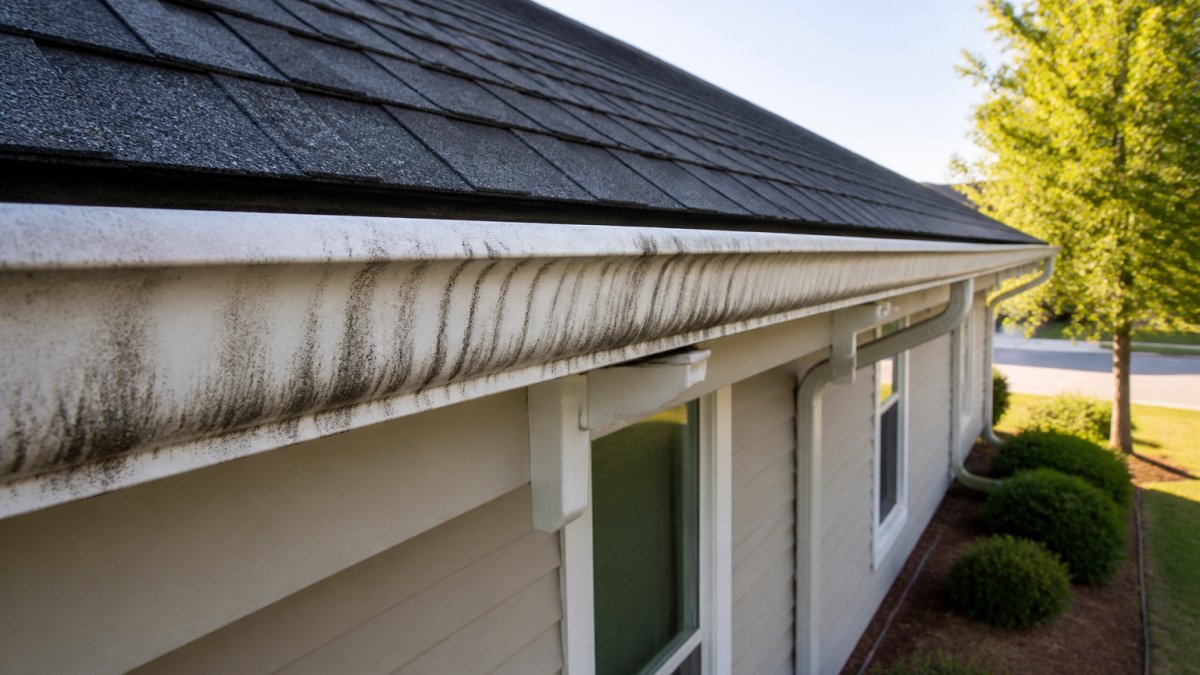
If you are seeing staining or drainage streaks along the gutter line, our guide to habits that prevent tiger stripes on gutters explains what those marks signal about flow and buildup.
Best gutter guards for snow and ice
There is no guard that stops ice dams, so the honest question is which guard performs best in winter conditions without making ice buildup or removal worse. The answer depends on your tree cover, snow load, and roof pitch, not on a single "best" product.
How the main types behave in winter
| Guard type | Debris blocking | Winter behavior | Maintenance in cold | Best for |
|---|---|---|---|---|
| Fine mesh | High, blocks pine needles and shingle grit | Drains fast, low pooling, but a thin debris film can hold moisture | Periodic brushing; avoid sharp tools on the mesh | Heavy pine needle areas |
| Screen (perforated metal or plastic) | Medium, blocks leaves | Can ice over in deep cold; perforations clog with grit | More frequent checks after storms | Mixed tree cover |
| Solid-cover | High, sheds large debris | Water can pool on the flat surface and refreeze at the cold edge; sliding snow can catch and stress fasteners | Inspect fasteners and seams each fall | Lower snow loads, milder winters |
| Heated cable systems | Not a debris guard; heat tape along the edge | Can keep a channel open but consumes energy and needs power and controls | Verify thermostat and connections before first freeze | Specific problem edges, not whole-roof fixes |
A few practical notes from winter work:
- Pitch matters. A guard that sits too flat holds water; steeper pitches shed meltwater faster.
- Snow shedding matters. Solid covers can catch sliding snow and shear at the fasteners; mesh and screen profiles let snow slide past more predictably.
- Ice-dam risk stays the same. No guard type fixes attic heat loss. Choose the guard for debris control and fix the heat separately.
What the claims do and do not tell you
When you compare guards, ask what was tested, at what temperature, for how long, and whether the test included debris. A product that drains clean water quickly in a lab may still hold a wet debris film that freezes at the eaves.
Generally, no guard type eliminates ice at the roof edge, and a guard's main winter role is keeping the channel clear so meltwater does not sit in the trough and refreeze.
If you already have guards and a dam is forming
- Do not remove bolted or screwed-down guards yourself in winter. Cold metal is brittle, fasteners strip, and roof access on snow is the leading cause of winter fall injuries.
- Document the problem. Note where ice is forming, whether water is backing up, and whether the guard is holding debris.
- Call early. A pro can steam the dam safely, clear the guard, and check whether the guard's pitch or fastening is contributing to pooling.
Choose the guard for debris control, confirm the winter behavior for your snow load, and treat the roof-heat fix as a separate project.
Do gutter guards need to be cleaned?
Yes. Gutter guards need cleaning, just less often than open gutters. Small debris, shingle grit, and pine needles work through or pile on top of the guard over time.
Most homes need a check once or twice a year, plus a look after any big storm. If yours is already overdue, our guide on how to tell if gutters are clogged walks through the warning signs. For the cleaning itself, these expert gutter cleaning methods cover the safe way to clear guards and troughs.
A clogged guard defeats the whole point. Water backs up, sits at the edge, and refreezes.
When guards make ice-dam removal harder
Guards can make ice-dam removal harder, because they block access to the gutter channel and the roof edge.
This is the part most product pages skip. If a dam forms and you need it cleared, the guard becomes an obstacle.
What to do if a dam has already formed:
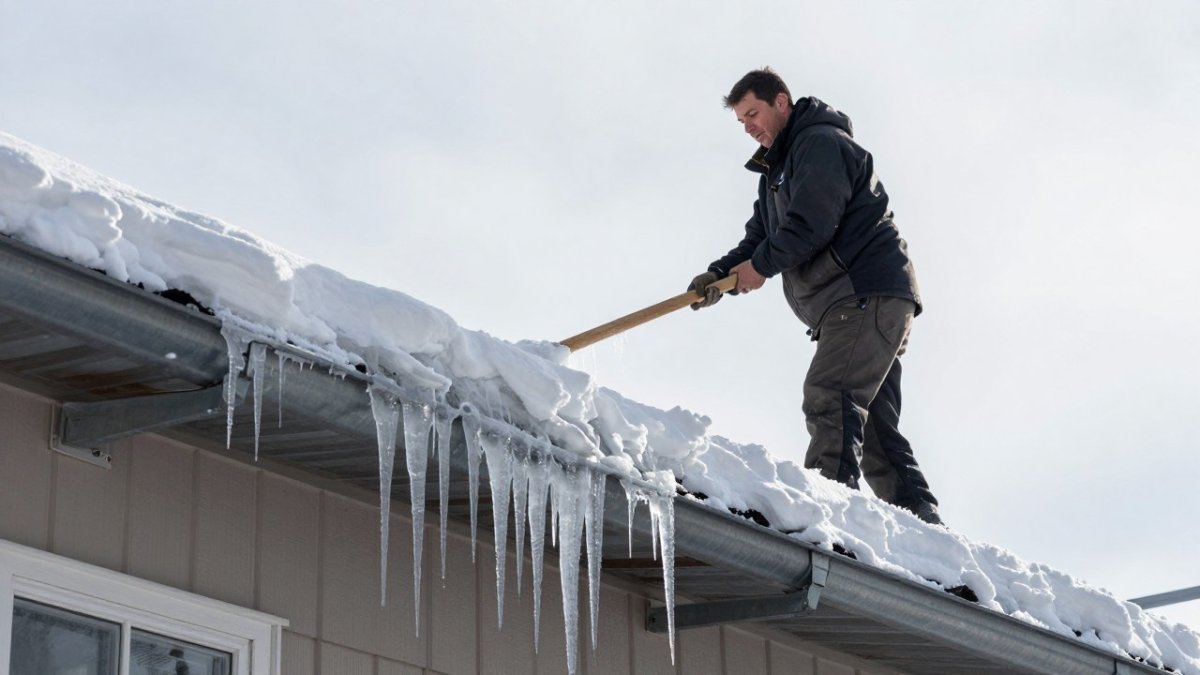
- Do not chip ice with an axe or hammer. You will damage shingles and possibly yourself.
- Do not climb onto a snowy roof. This is how winter roof injuries happen.
- Call a professional who can steam the dam safely and check the guard afterward.
If your guards are bolted down and a dam is forming, get help early. Waiting until the water is backing into the attic costs far more.
Book a pre-winter roof and gutter inspection
The most useful step you can take before the snow arrives is a professional inspection.
Roof Tune Up provides roof cleaning, soft washing, gutter cleaning, and house washing across Connecticut and Massachusetts.
You can book a pre-winter roof and gutter inspection and get a clear picture of what your roof needs before freezing temperatures set in.
Do not let a guard give you false confidence. Ice dams come from heat, and the fix starts in the attic.
Frequently Asked Questions
Do gutter guards work in winter?
They keep leaves and debris out of the trough, which helps meltwater reach the downspouts instead of pooling behind a clog. They do not stop ice dams, because a dam forms from attic heat melting snow on the roof, not from a full gutter. In heavy snow, guards can also hold snowpack at the roof edge, so pair them with attic insulation and ventilation work rather than treating them as a winter fix on their own.
What is the downside to gutter guards?
Cost is the first one, followed by maintenance that never fully goes away: small debris and shingle grit still collect on top of the guard and need clearing. Some solid-cover designs can give meltwater a surface to pool and refreeze at the eaves, and ice or debris can interfere with drainage. Guards can also get in the way when a technician needs to remove ice, which adds time to the job.
Can gutter guards void a roof warranty?
A guard itself rarely voids a warranty, but incorrect installation can. Fasteners driven through the wrong part of the roof, or a guard that traps water against the shingles or fascia, can give a manufacturer grounds to deny a claim. Check your warranty terms before installation and keep the paperwork. A professional installer who follows the manufacturer's fastening and clearance requirements protects both the roof and the warranty.
Why do I still get icicles with gutter guards installed?
Icicles form when snowmelt runs off the roof edge and refreezes in cold air, and guards do not change roof temperature. If the attic is warm, snow melts high on the roof, flows down, and freezes at the cold eaves whether a guard is present or not. Icicles alone also do not prove an ice dam exists. Look for a ridge of ice along the eaves and water staining on the siding or soffit before assuming a dam.